Blog · Tetrazolium
Red embryos breathe
In tetrazolium, living tissue turns the embryo red. SeedCounter proposes viable or non-viable, marked by shape as well as color, and you check.
October 27, 2026 · 5 min read · by Enrico S. Ambrosio
The tetrazolium test answers a simple question much faster than the germination test. Is the seed viable?
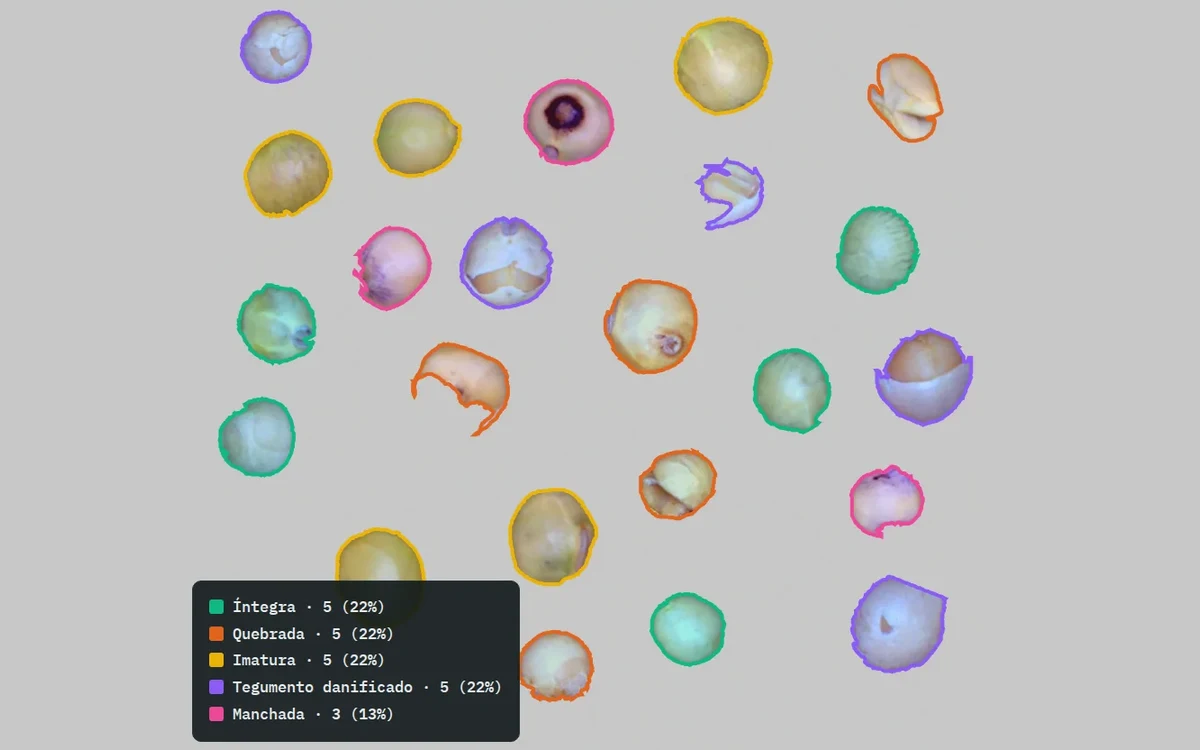
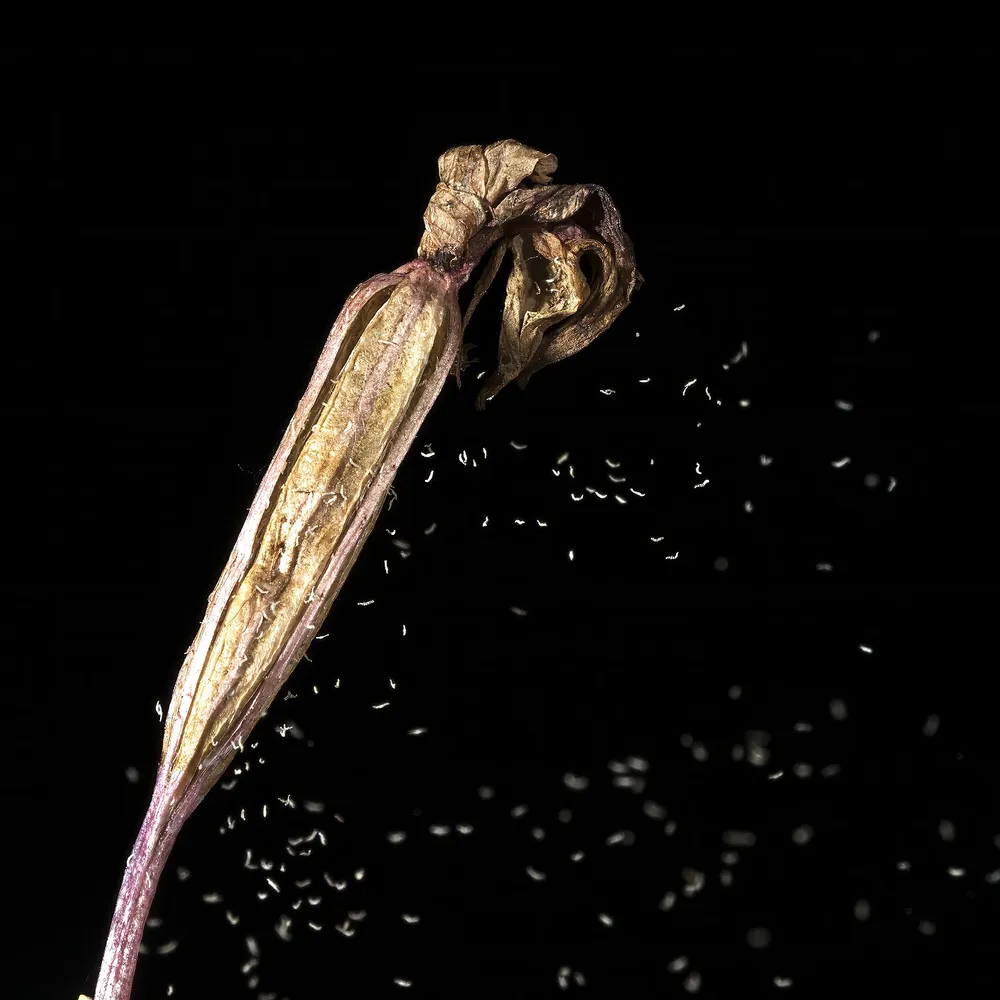
The animation above uses a real image of orchid seeds after tetrazolium, from the dataset annotated by the orchid research group (GPEOrq). Of the 65 annotated seeds, 36 have a red embryo and were marked viable, and 29 stayed pale. Plate viability comes out at 55.4% (36 of 65).
An orchid seed is little more than an embryo and a seed coat. It has no food reserve, and the embryo is a small ball of cells with no formed root or leaf. The embryo is what tetrazolium stains.
From selenium to tetrazolium
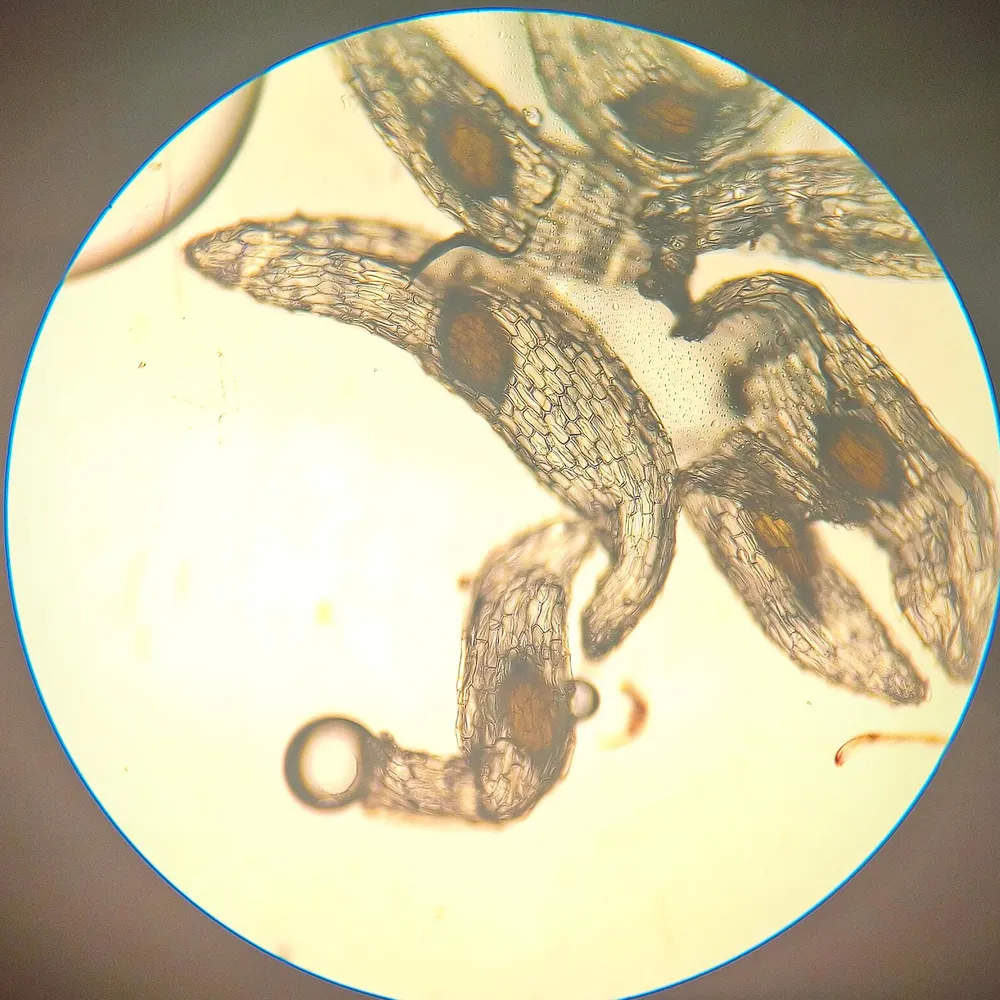
The test has an author and a date. In Germany, the researcher Georg Lakon was looking for a chemical way to see, in a cut seed, which parts were alive. The first version used sodium biselenite, which also marks living tissue but is toxic. In 1942, Lakon published the method with tetrazolium salts, which do the same job without the poison.
The test was used in Germany during the war and soon spread beyond it. By 1947, Nature already carried a British paper assessing the salt as a germination indicator for cereals. Today it is in the seed testing rules of many countries, Brazil included.
The chemistry of the color
The seed is hydrated and placed in a tetrazolium salt solution, whole or already cut, depending on the species. The salt goes in colorless. In living tissue, dehydrogenase enzymes, active in respiration, reduce the salt to formazan, a red compound that does not dissolve and stays trapped in the tissue. Dead tissue does not respire and stays pale.
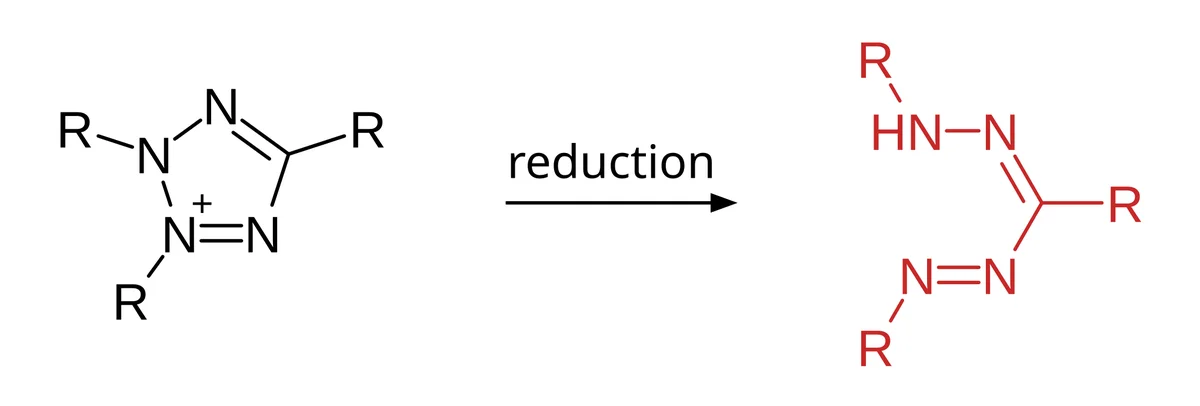
That is why the test also works for dormant seeds, which are viable but would not germinate within the period of the germination test.
So the color is a record of respiration. Red embryos breathe. A pale one is not.
The machine proposes, the person checks
In SeedCounter, the machine looks at each seed and proposes a class. The proposal appears first and only becomes data when you check it. In tetrazolium, that order matters, because the analyst's reading goes beyond whether there is red or not.
- Where the color is matters. A pale area on the embryo axis counts for more than one at the tip of the cotyledon.
- How intense it is matters. Very dark red, carmine, usually indicates deteriorating tissue, and milky white indicates dead tissue.
- The light matters. Without a gray card in the scene, the same red changes from one photo to the next.
The Brazilian Rules for Seed Testing describe these criteria for each species. The machine helps you get through the seeds faster. The judgment stays with you.
How many seeds are enough?
The plate at the top gives 55.4% viability. But 65 seeds still leave a wide margin. The animation reads the same 65 real seeds, one by one, in a random order, and draws the cumulative viability with the band where the true value should be, at 95% confidence.
For the first few seeds, the band covers almost the whole chart. With all 65, it runs from 43% to 67%, about 12 points either way. If the plate had 200 seeds in the same proportion, the margin would drop to about 7 points. With 400, to 5. That is why official tests use hundreds of seeds, split into replicates, not a single plate.
The margin does not depend on the machine or on who reads the plate. It comes only from the sample size. With seed-by-seed checking, SeedCounter takes care of the other part, making sure each seed is in the right class.
Shape as well as color
In SeedCounter, viable seeds get a solid cyan disc. Non-viable seeds get a hollow magenta ring. The two classes differ in shape as well as color.
We did it this way for two reasons. Many people can't tell certain color pairs apart, and red and green is the best-known case. And a test report printed in black and white loses the color. The shape is still there. In the app, it looks like this.
Got a photographed tetrazolium plate? Load it in SeedCounter, check the classes and watch viability come out with the number of each seed.
Going deeper: the statistics of the report, agreement with the analyst and when color hides a class.
Sources
- Cottrell, H. J. (1947). Tetrazolium salt as a seed germination indicator. Nature, 159, 748, which cites Lakon's biselenite method and his 1942 tetrazolium method. Nature
- Sementes de Orquídeas, version 8, annotated by GPEOrq, CC BY 4.0. Roboflow Universe
- The 95% band is the Wilson interval for proportions. Wikipedia. The calculation is in the
tz-margemscene, inassets/cena.js.
For the full math: Color and class, with 1,614 real orchid seeds in tetrazolium.