Enrico S. Ambrosio
A mathematician with a master's in mathematics, now studying agronomy. He writes the app, the image models and the math behind every measurement.


About
SeedCounter by Hilum is built and maintained by Enrico S. Ambrosio, together with the orchid research group (GPEOrq) and the seed research group (GPSEM), coordinated by Prof. Nelson Barbosa Machado-Neto and Prof. Ceci Castilho Custódio. It started with orchid seeds, some of the smallest there are, and grew to cover soybean, rice, forage grasses and whatever else fits on a plate.
Who makes it
Who writes the app and who guides the science behind it.
A mathematician with a master's in mathematics, now studying agronomy. He writes the app, the image models and the math behind every measurement.
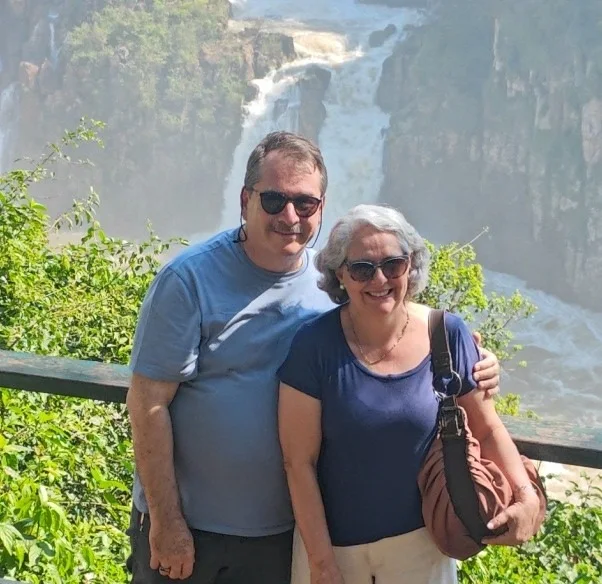
Agronomist, PhD in biological sciences (plant biology) and full professor since 1991. He coordinates GPEOrq, the orchid research group, and GPMeF, the forage research and breeding group.
He did postdoctoral research in seed biology at the Millennium Seed Bank, Kew Gardens. He is a member of the ISTA Storage Committee and of the IUCN Orchid Specialist Group, which he co-chairs for South America, and a CNPq DT-2 fellow. He works on orchid breeding and conservation, especially rupicolous Cattleya, with 114 registered hybrids, and takes part in the OSSSU network of orchid seed banks, together with Kew and the Singapore Botanic Gardens.
Agronomist with a master's in crop science and a PhD in botany. Professor of Seed Production and Technology and coordinator of GPSEM, the seed research group. She did postdoctoral research at Kew Gardens.
At ABRATES, the Brazilian Seed Technology Association, she served on the Fiscal Council for the 2024–2026 term and is an associate editor of the Journal of Seed Science, the association's journal. She wrote the chapter on tetrazolium testing in tropical forage grasses for the ABRATES book Vigor de sementes: conceitos e testes. Her research covers germination, seed vigor, tetrazolium, dormancy and the storage conditions of seeds, from orchids to forage grasses and field crops, as well as near-infrared analysis to assess a seed lot without destroying the seed.
The groups
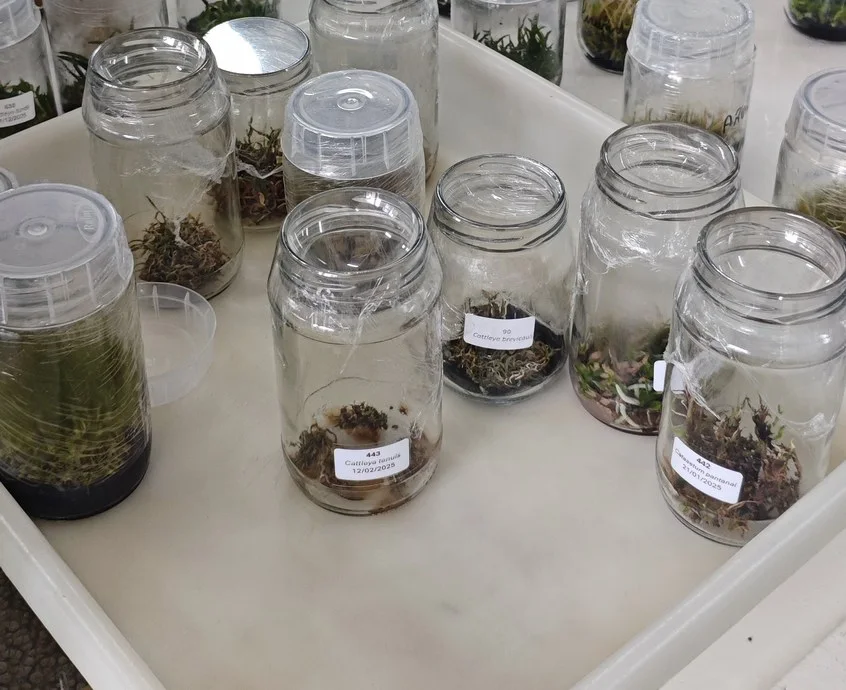
GPEOrq, the orchid research group coordinated by Prof. Nelson, works with orchids from seed to plant: in vitro sowing, tetrazolium, seed banking and breeding. GPSEM, the seed research group coordinated by Prof. Ceci, studies seed quality through germination, seed vigor, tetrazolium and storage, from forage grasses to field crops.
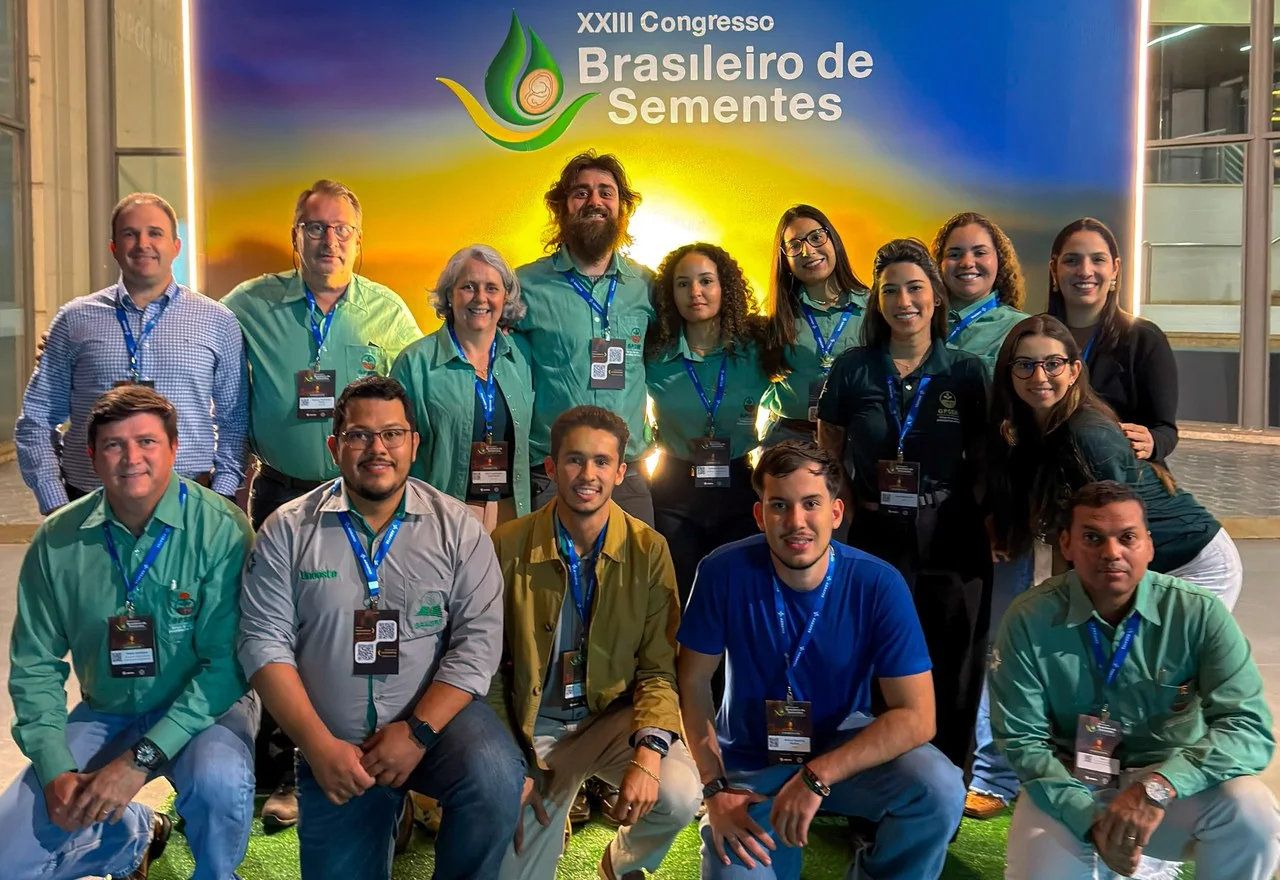
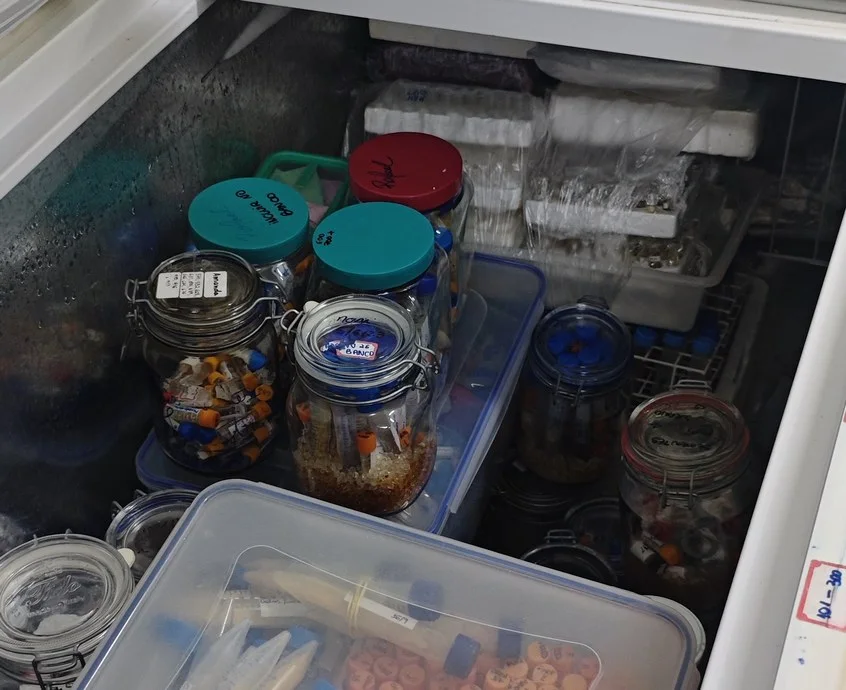
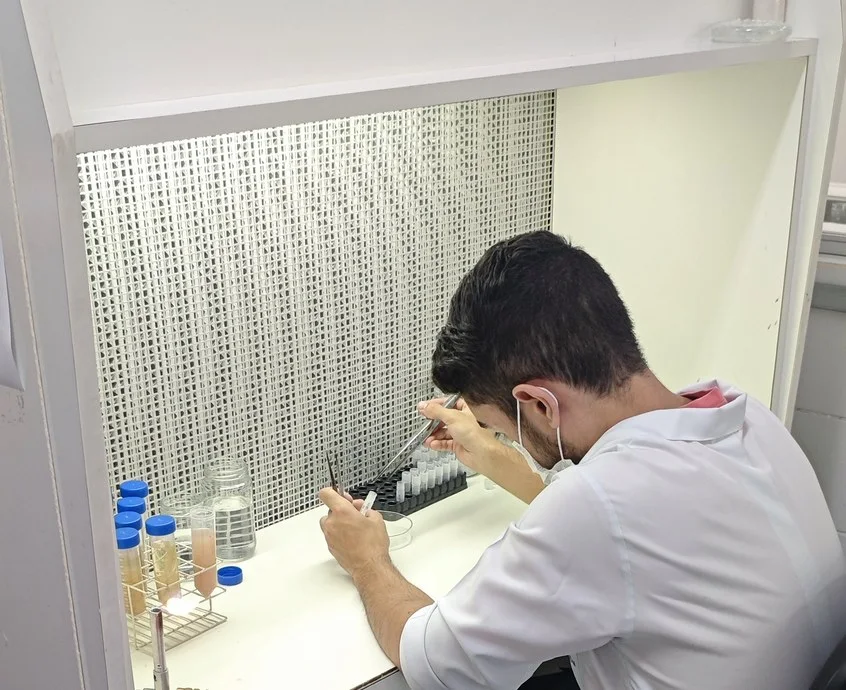
SeedCounter grew out of both groups. The images it measures come from these benches, and so do the questions.
Where it came from
SeedCounter was born in GPEOrq. The question was simple and tiring: how many orchid seeds are on this plate, and how many are viable after the tetrazolium test? Counting by hand under the microscope took hours and depended on the eye of whoever was counting.
The group had been reading tetrazolium tests from flatbed scanner images since 2011. In 2012, with signal grass (Urochloa) seeds, it showed that reading from an image scanned at 1,200 dpi is equivalent to reading under the stereomicroscope. SeedCounter continues that work: what used to be opening the image and counting by eye has become counting, measuring, classifying and exporting, with the scale recorded.
The first version counted orchid seeds with a computer vision model. Then came the ruler for measuring in millimeters, the tetrazolium classes, the gallery for checking seeds one by one, germination and the test report. Each feature was added because someone at the bench needed it.
The rule that has held since the start: the machine proposes, the person checks.
The groups' work
A selection of the GPEOrq and GPSEM work behind the app, in three areas. The complete record is in each researcher's Lattes CV.
Custódio C.C., Damasceno R.L., Machado Neto N.B. Imagens digitalizadas na interpretação do teste de tetrazólio em sementes de Brachiaria brizantha. Revista Brasileira de Sementes 34(2), 334–341. doi:10.1590/s0101-31222012000200020
At 1,200 dpi, reading the tetrazolium test from the scanner image was equivalent to reading under the stereomicroscope. It is SeedCounter's direct precedent.
Hosomi S.T., Santos R.B., Custódio C.C., Seaton P.T., Marks T.R., Machado Neto N.B. Preconditioning Cattleya seeds to improve the efficacy of the tetrazolium test for viability. Seed Science and Technology 39(1), 178–189. doi:10.15258/sst.2011.39.1.15
Without a sucrose preconditioning step, the tetrazolium test underestimates the viability of orchid seeds.
Custódio C.C., Marks T.R., Pritchard H.W., Hosomi S.T., Machado-Neto N.B. Improved tetrazolium viability testing in orchid seeds with a thick carapace (Dactylorhiza fuchsii) or dark seed coat (Vanda curvifolia). Seed Science and Technology 44(1), 177–188. doi:10.15258/sst.2016.44.1.17
Bleaching and scarification with hypochlorite to make the embryo visible. It is the protocol Kew cites in its machine learning project for orchids.
Custódio C.C., Aguiar R.P. Teste de tetrazólio em sementes de gramíneas forrageiras tropicais. In Krzyzanowski F.C., Vieira R.D., França-Neto J.B., Marcos-Filho J. (eds.), Vigor de sementes: conceitos e testes, 2nd ed., ch. 15. ABRATES.
The tetrazolium method for assessing seed vigor in eight forage species, with illustrations of Urochloa brizantha seeds.
Custódio C.C., Hosomi S.T., Machado Neto N.B. Teste de tetrazólio em sementes de orquídeas. Boletim de Pesquisa PPGA 2(2), 54–59. PDF
The protocol for each genus, with preconditioning, scarification and bleaching, and reading from scanner images.
Machado Neto N.B., Custódio C.C. Orchid conservation through seed banking: ins and outs. Selbyana 26(1/2), 229–235. Selbyana
A seed bank is the simplest and cheapest way to keep orchids, with a lot of variability in a small space. The caveat is that many tropical orchids have short-lived seeds.
Hosomi S.T., Custódio C.C., Seaton P.T., Marks T.R., Machado Neto N.B. Improved assessment of viability and germination of Cattleya (Orchidaceae) seeds following storage. In Vitro Cellular and Developmental Biology, Plant 48(1), 127–136. doi:10.1007/s11627-011-9404-1
Ties tetrazolium to germination in stored Cattleya seeds.
Seaton P.T., Hosomi S.T., Custódio C.C., Marks T.R., Machado-Neto N.B. Orchid seed and pollen: a toolkit for long-term storage, viability assessment and conservation. In Lee Y.-I., Yeung E.C.-T. (eds.), Orchid Propagation: From Laboratories to Greenhouses, 71–98. Humana Press. doi:10.1007/978-1-4939-7771-0_4
Drying, storage and viability testing of orchid seeds and pollen, step by step.
Hengling M.M., Gianeti T.M.R., Hosomi S.T., Machado-Neto N.B., Custódio C.C. Storage of Brazilian Cattleya seeds from diverse biomes: lipid composition and effects on germination. Plant Biosystems 155(3), 487–497. doi:10.1080/11263504.2020.1762781
Dry seeds of seven Cattleya species stored for nine months at room temperature, 5 °C, −18 °C and in liquid nitrogen germinated well under all four conditions.
Francisqueti A.M., Marin R.R., Hengling M.M., Hosomi S.T., Pritchard H.W., Custódio C.C., Machado-Neto N.B. Orchid seeds are not always short lived in a conventional seed bank! Annals of Botany 133(7), 941–952. doi:10.1093/aob/mcae021
Seeds of eight Cattleya species, dried and stored at −18 °C for more than a decade, kept germinating.
Abrantes F.L., Machado-Neto N.B., Custódio C.C. Seed moisture content can be used to accelerate dormancy release during after-ripening of Urochloa humidicola cv. Llanero spikelets. Ciência Rural 51(1), e20200526. doi:10.1590/0103-8478cr20200526
Storing the spikelets with a little more moisture released dormancy sooner over the year, with no chemicals.
Abrantes F.L., Machado-Neto N.B., Custódio C.C. Seed storage and germination of three grass species: effect of spikelet weight and dormancy. Brazilian Archives of Biology and Technology 68, e25241009. doi:10.1590/1678-4324-2025241009
Spikelets of three Urochloa species stored at 20 °C, in dry or humid air, for up to 44 months. The heavier ones kept better in dry air.
Storage is explained with examples from the bench in Storage and viability.
Andriazzi C.V.G., Rocha D.K., Custódio C.C. Determination of the physiological quality of corn seeds by infrared equipment. Journal of Seed Science 45, e202345002. doi:10.1590/2317-1545v45265346
Near-infrared analysis to separate corn seed lots by germination and seed vigor, without destroying the seed.
In research
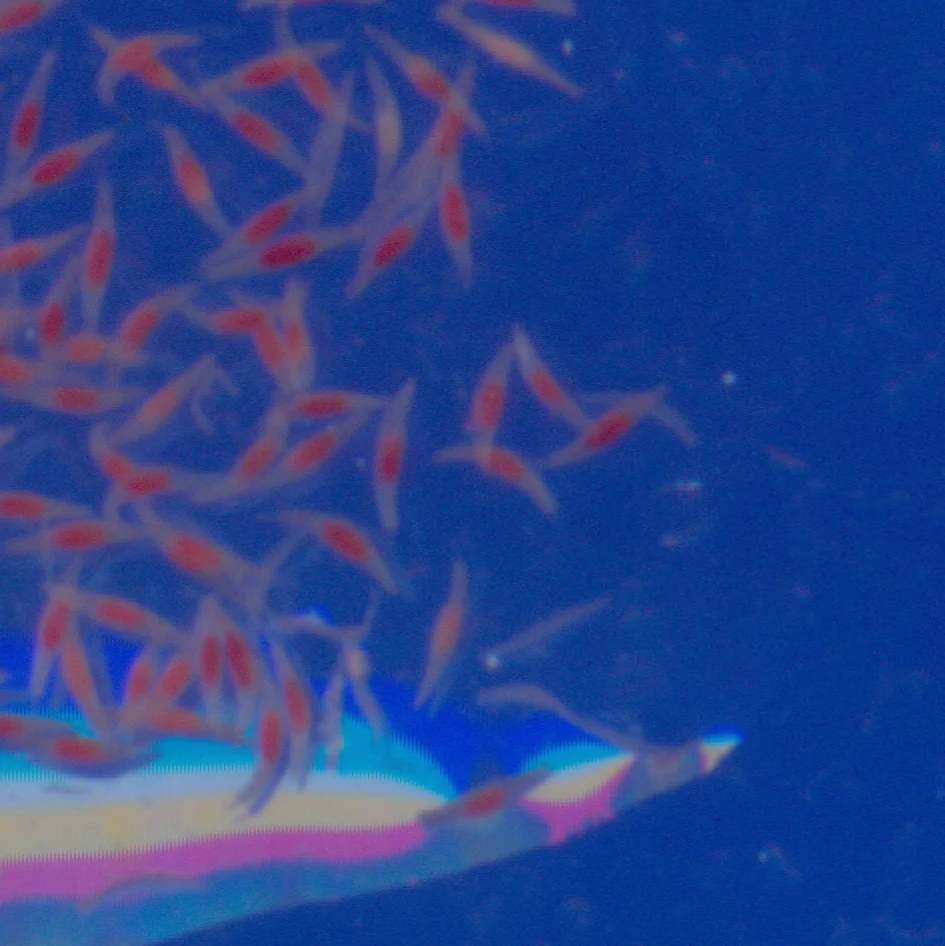
At the Millennium Seed Bank, the seed bank of Kew Gardens, a team is training a machine learning model to read tetrazolium staining in orchid seeds. Experts annotated about 63,000 seeds across 522 images. The staining protocol they cite is the group's, from 2016, written with coauthors from Kew itself. SeedCounter's two advisors both did postdoctoral research at Kew, and Prof. Nelson worked at the same seed bank.
| Kew · Millennium Seed Bank | SeedCounter · GPEOrq | |
|---|---|---|
| The seed | Orchid, smaller than a letter on a coin | Orchid, with a median length of 0.68 mm in the measured sample |
| The capture | USB microscope over a light box, no scale in the image | Flatbed scanner at 3,600 or 4,800 dpi, with a ruler, and µm per pixel measured |
| The reading | "Alive", "dead" or "empty", annotated by experts and by the model | Viable or non-viable, proposed by the machine and checked by the person; empty seeds are still a gap |
| The deliverable | A web application for other seed banks, in development | An app in the browser that works without uploading the image |
| What is missing | A published figure for agreement with experts, and validation against germination | Same gap: agreement with analysts and validation against germination |
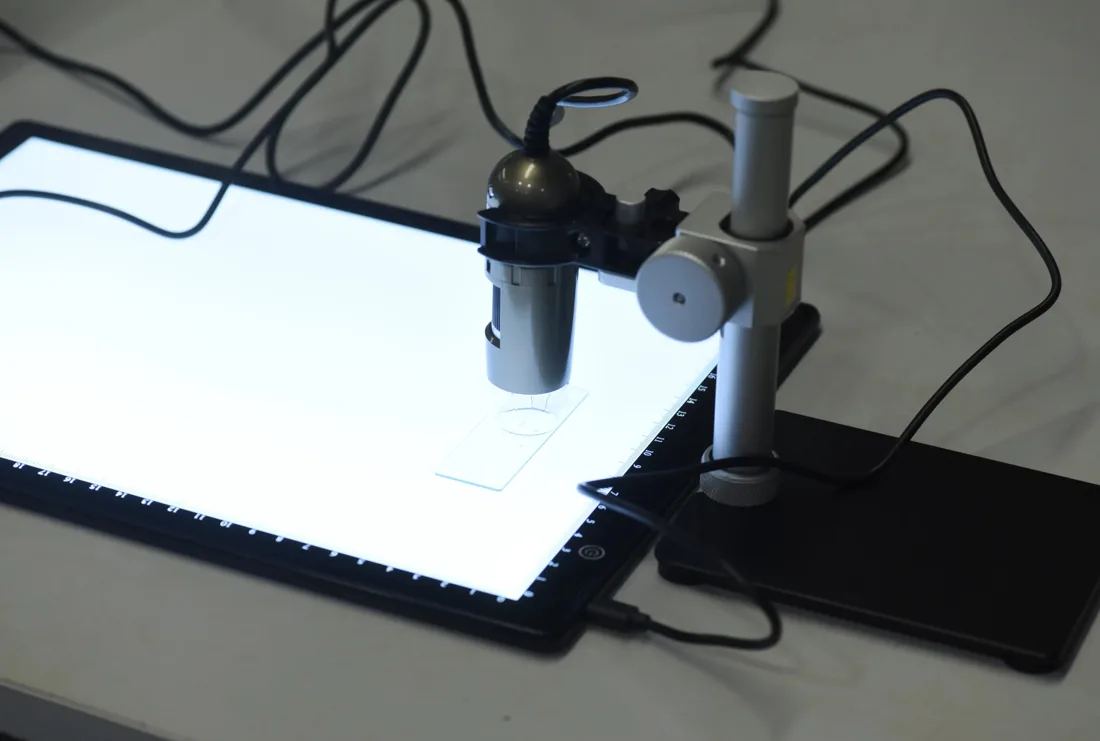
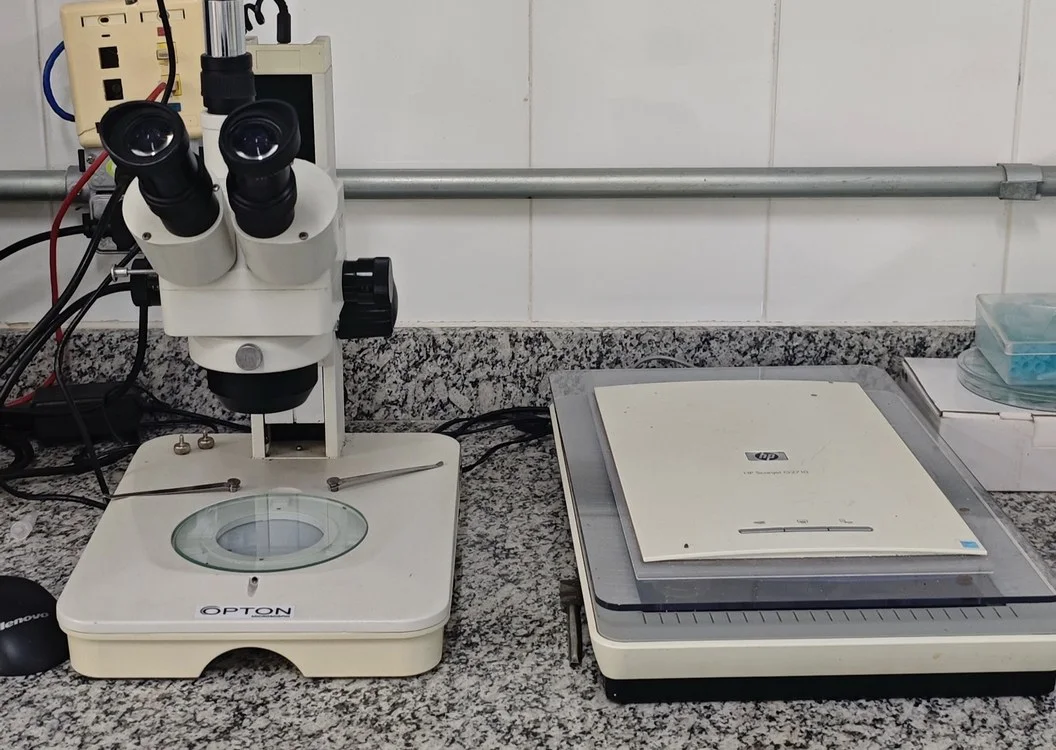
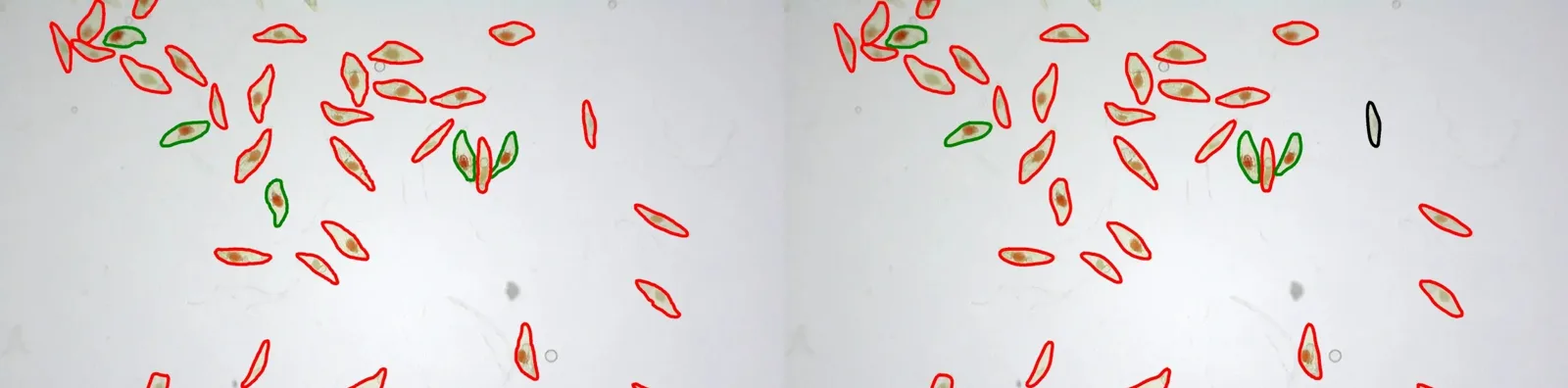
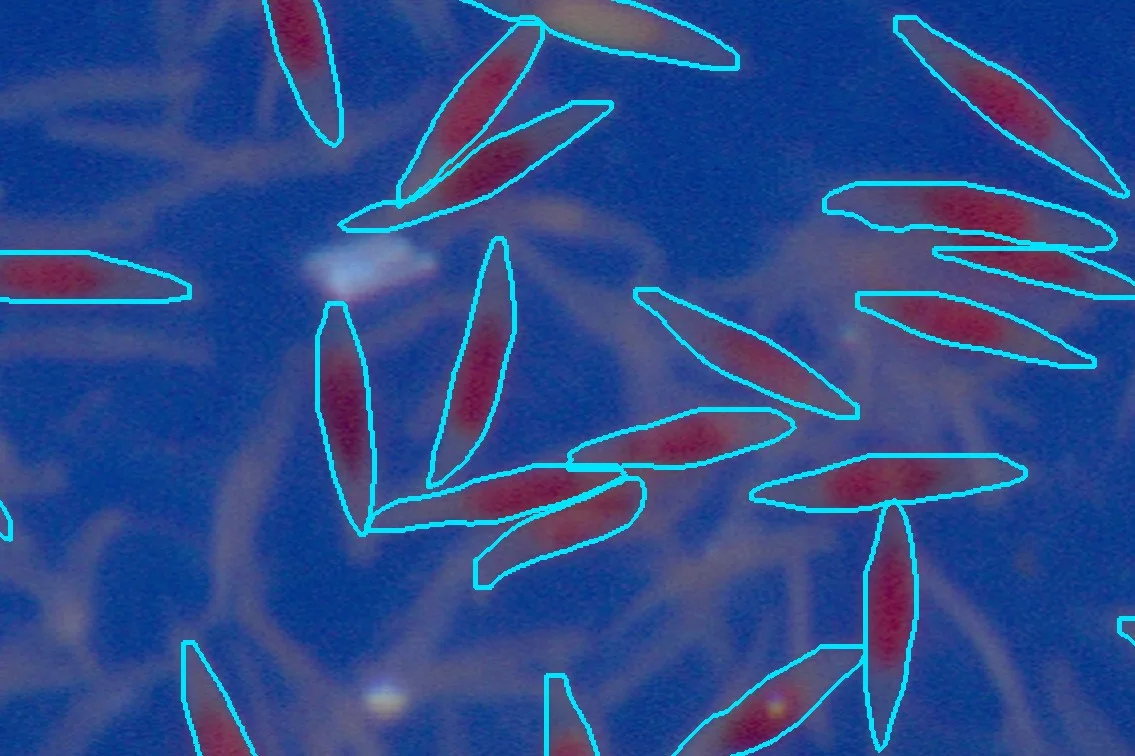
The question they leave open is how red the embryo has to be to count as viable, because even the experts disagree. SeedCounter measures the color inside each outline and leaves the decision to whoever checks. A study with the same plates read by the experts from both labs and by both models would answer both questions at once. The color calculation is in Color and class.
Sources: the Kew project, the article "How machine learning can help us conserve orchid seeds" (kew.org, 20 June 2025), from which the two Kew images are taken, and Hudson A.R. et al. (2025), Using machine learning to address ex situ seed conservation challenges, BGjournal 22(1), 7–9.
Acknowledgments
SeedCounter exists because two research groups made room for the idea and because the people who use it every day pointed out each mistake. Thank you.
The name
The hilum is the mark left where the seed was attached to the mother plant.
The spot on the cowpea's hilum gave it its English name: black-eyed pea.
The curves in the symbol are the distance field of the actual mean shape of 145 seeds, the same calculation as on the Learn page.
Principles
Every proposal appears as a dashed outline before it becomes data. The person who knows the seed decides.
Processing happens in the browser. Unpublished research stays yours.
What was not measured stays blank, and what was estimated says it is an estimate.
Viable and non-viable seeds also differ in the shape of the mark, not just in color, for people who cannot tell colors apart and for printouts.
Privacy
The site itself does not collect personal data. If usage analytics is turned on, it loads only after you accept the notice in the corner of the screen, and your choice is stored in your browser. The images you analyze in SeedCounter stay on your computer, because the app runs in the browser.
Open the app and load the image. Nothing is sent to a server.
This site uses Google Analytics and Microsoft Clarity to learn which pages get read, and none of it loads before you choose.