Blog · Bench
Light decides the outline
Raking light stretches shadows and merges neighboring seeds. Overhead light causes glare. Between 35° and 65°, with a diffuser, the outline stays clean.
October 30, 2026 · 5 min read · by Enrico S. Ambrosio
Before any algorithm, the light has already decided a good part of the outline. A seed's shadow shows up in the photo as a dark smudge stuck to it. On a light background, the program can merge shadow and seed into one object.
The animation above is a simulation seen from the side. Two model seeds, 1.4 mm tall, sit 2.0 mm apart. Only the height of the light changes.
A bit of trigonometry
The size of the shadow comes from a single formula.
shadow = height ÷ tan(light elevation)
With the 1.4 mm tall seed, the math goes like this.
- At 45°, the shadow is 1.4 mm, because tan(45°) = 1.
- At 35°, the shadow reaches 2.0 mm and touches the neighbor.
- At 18°, the shadow is over 4.3 mm.
- At 65°, it drops to 0.65 mm.
In a photo at 40 px/mm, the 4.3 mm shadow takes up 172 pixels. That is almost double the width of the model seed, which is 2.3 mm. The scale math is in the post The DPI declares, the ruler measures.
Eratosthenes did the same math
This formula is more than two thousand years old. Around 240 BC, Eratosthenes measured the shadow of a rod in Alexandria on the day when, in Syene, farther south, the noon Sun cast no shadow at the bottom of a well. The shadow gave an angle of 1/50 of a circle, about 7°. Since the two cities were 5,000 stadia apart, the full circle of the Earth would be 250,000 stadia.
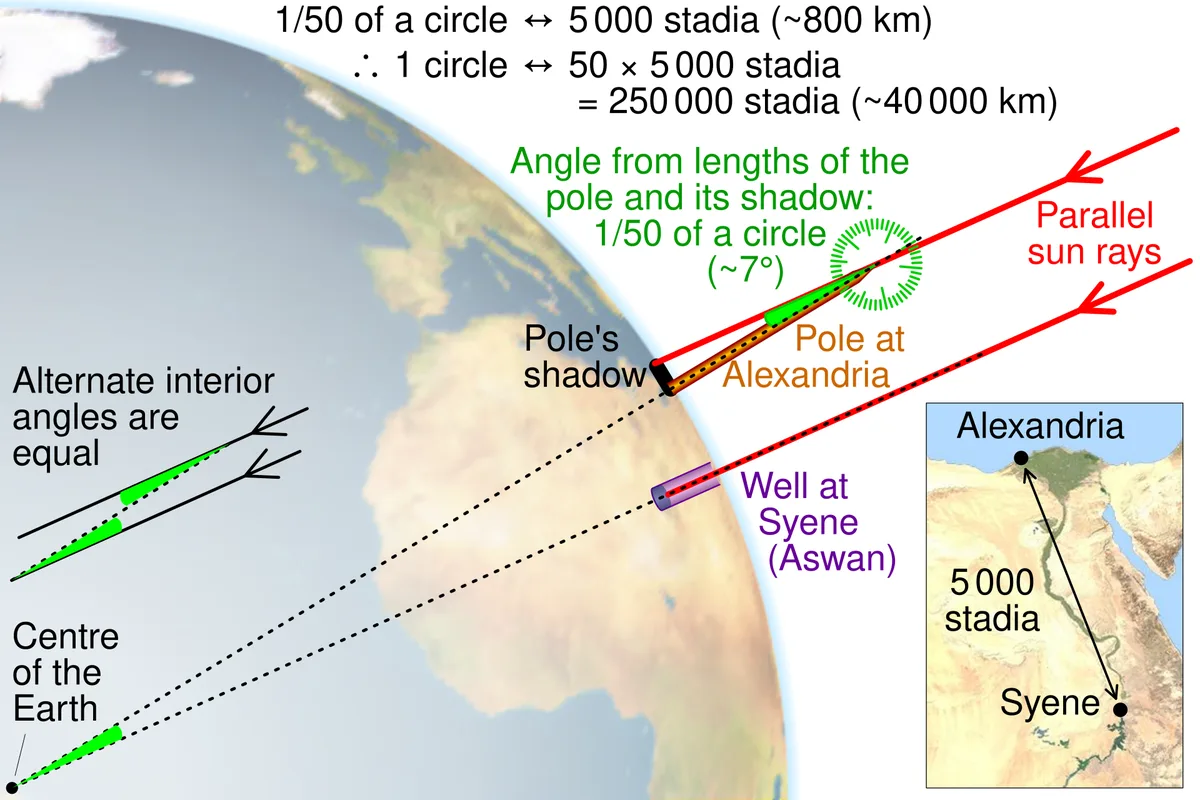
Eratosthenes used the shadow to measure the Earth. At the bench, we want the opposite: a shadow so short it stays out of the seed measurement.
Neither raking nor overhead
Low, raking light stretches the shadow. Below 35°, in the simulation, one seed's shadow touches the next one, and the algorithm may see two seeds as one.
People who study ancient coins, carvings and paintings use raking light on purpose. The long shadow brings out any relief. It is great for reading a worn inscription and terrible for measuring the outline of a seed.
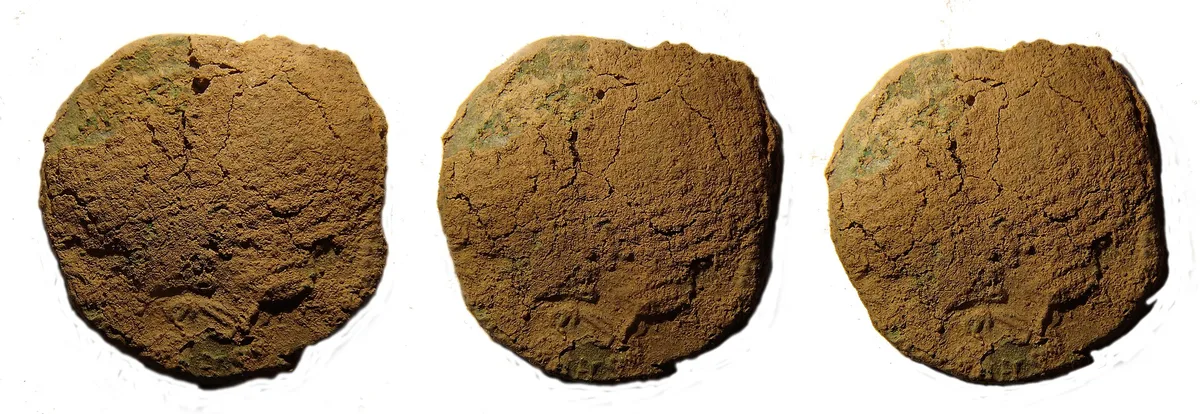
High light, almost overhead, shortens the shadow but creates another problem. The smooth seed coat bounces the light back to the lens, and a white glare appears on top of the seed. That glare can be read as background and open a hole in the outline.
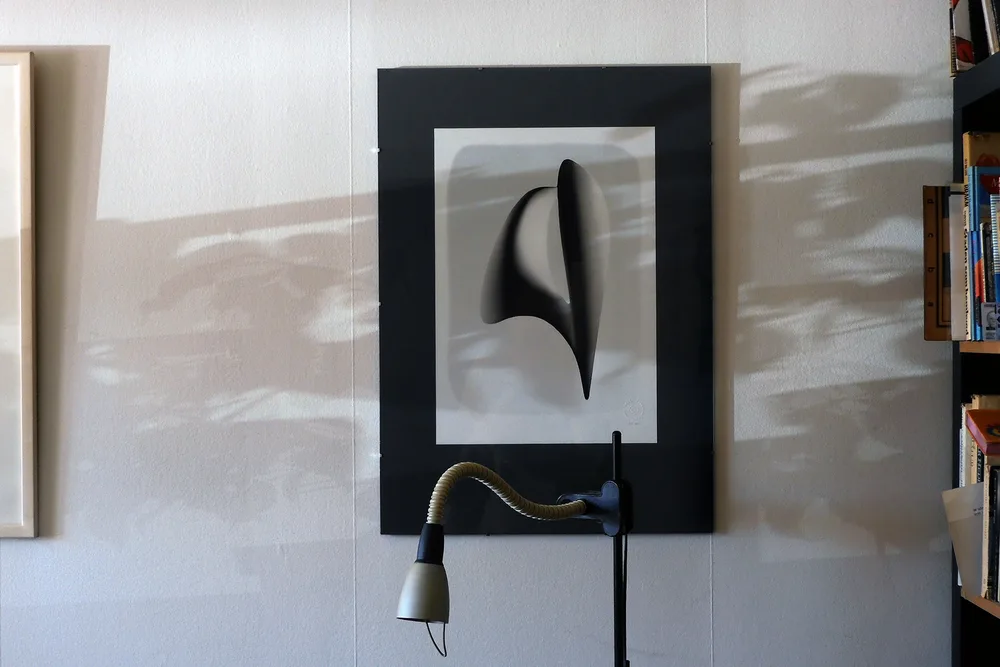
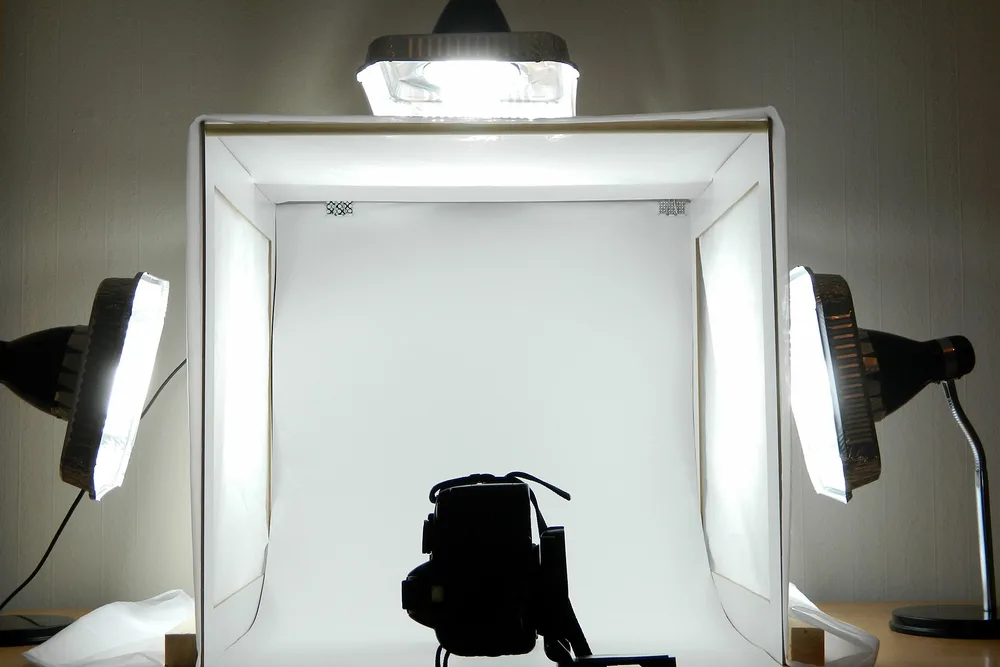
Between 35° and 65° is the range we recommend. A diffuser in front of the lamp spreads the light and softens the edge of the shadow. Two panels on opposite sides balance one shadow against the other.
In practice: light seed, dark seed
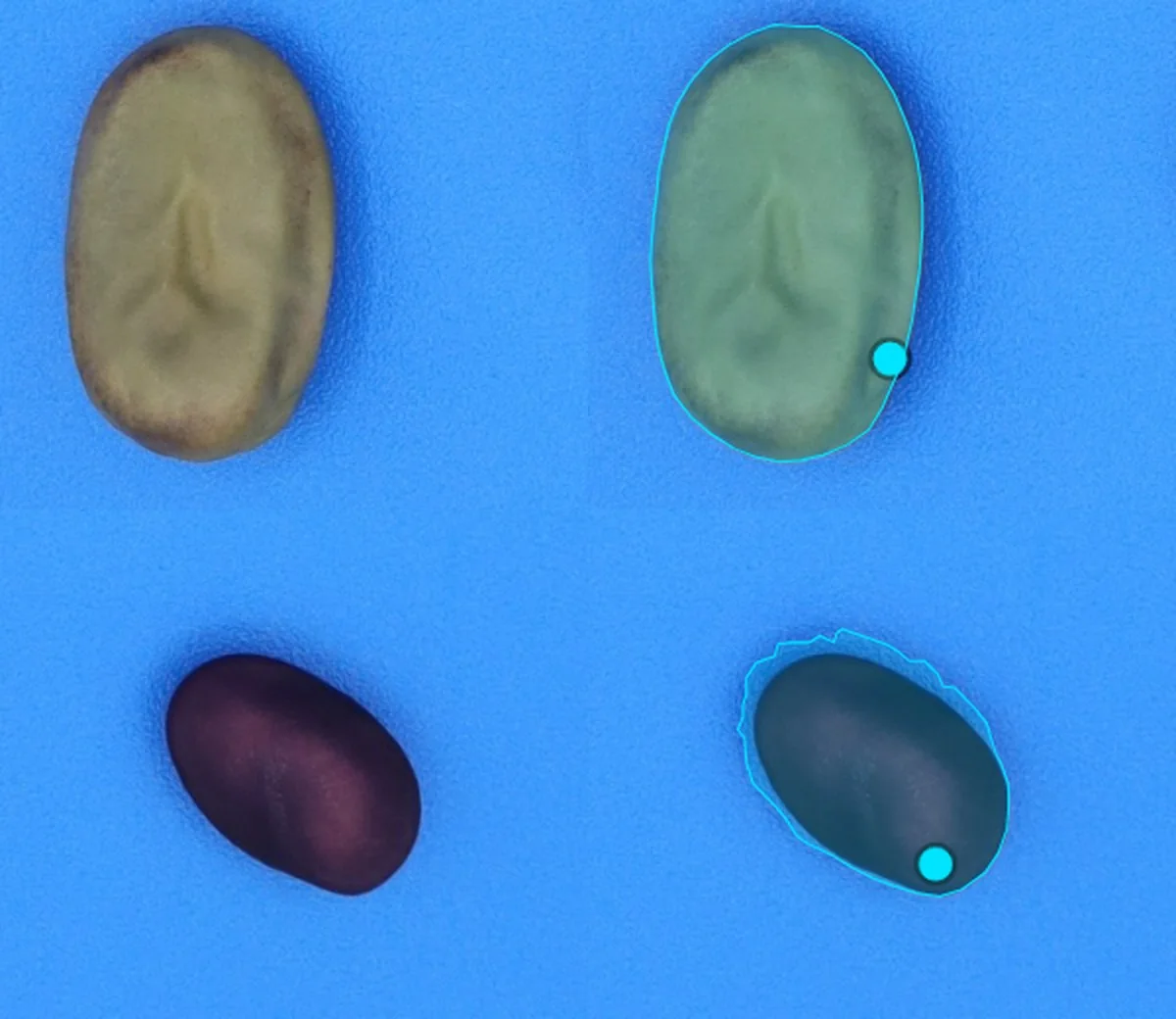
In a public set of faba bean photos, with a ruler and a blue background, we measured 160 seeds in SeedCounter and compared them with the authors' own analysis. In the photos of light seeds, the outline sits on the edge and the mean length agrees within 2%. In two lines with dark purple seeds, the shadow is almost the color of the seed's edge, and the outline spreads over it: length grows 6 to 7% and width 13 to 17%.
Even the scanner casts a shadow
A flatbed scanner looks free of this, because the light runs right against the glass. But the lamp comes from one side. In 10 soybean scans from a public dataset (Syahraza et al., 2025, CC BY 4.0), we measured the background brightness around 1,078 seeds, out to 1.9 mm from the edge, in each direction.
On the top side of the image, the background is already bright 0.1 mm from the seed. On the bottom side, the shadow starts out very dark and only fades out near 1.6 mm. Its half-width is 0.73 mm, about 23 pixels at 800 dpi. On the sides, the shadow is fainter and longer.
An outline that mistakes this band for the seed makes the measurement larger, and in the same direction for every seed. In the soybean post, on November 3, we show how large that effect is in a public dataset.
What the app does with the leftover shadow
Some shadow always remains. SeedCounter looks for the seed's edge by color, and with a well-contrasted background the shadow stays out. With a dark seed, like the purple faba above, part of it can get in; recognizing the shadow in the image itself is the app's next step. When a shadow joins two seeds, it proposes splitting them, and you choose whether to split or keep them. At the bench, it looks like this.
 The same plate with raking light and with 45° light and a diffuserF04 · recording script
Light, background and ruler are set once, during bench setup. After shooting, check the outline in SeedCounter.
Sources
- Eratosthenes and the measurement of the Earth's circumference. Wikipedia
- Syahraza et al. (2025), soybean seeds of three Indonesian varieties, Mendeley Data, doi:10.17632/c733bjz4m3.3, CC BY 4.0. The shadow calculation is in
_src/real/soja/sombra.py. - Ortega Polo and Larkan (2026), faba bean photos with a ruler, AAFC, CC BY 4.0.
For the full math: The threshold, with Otsu running on real images and where it fails.