Blog · Seeds of Brazil
Brazil's largest crop is pasture
That is 165.6 million hectares of grass, three times soybean and sugarcane combined. And Brazil is the world's top exporter of tropical forage seed.
November 6, 2026 · 5 min read · by Enrico S. Ambrosio
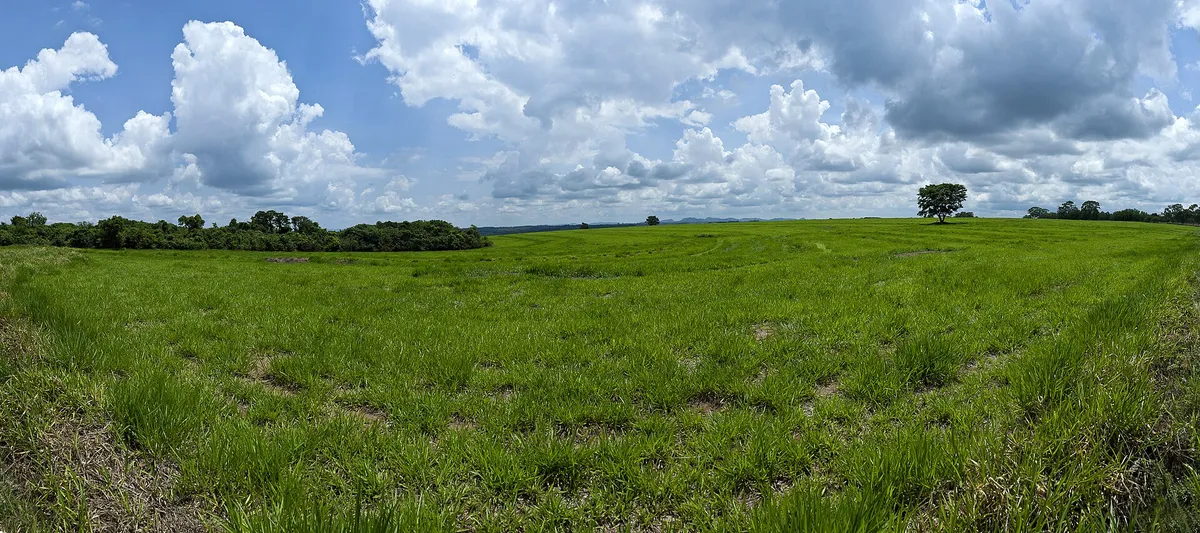
When people talk about crops in Brazil, the conversation turns to soybean, corn and sugarcane. But the largest land use in Brazilian agriculture is grass. In 2025, MapBiomas mapped 165.6 million hectares of pasture, 60.6% of all the area occupied by farming and livestock.
Three times soybean and sugarcane
In the same mapping, soybean covered 44.2 million hectares and sugarcane 11.1 million. Together they come to 55.3 million, a third of the pasture area. Using the territorial area from IBGE, pasture covers about 19% of Brazil, almost a fifth of the territory.
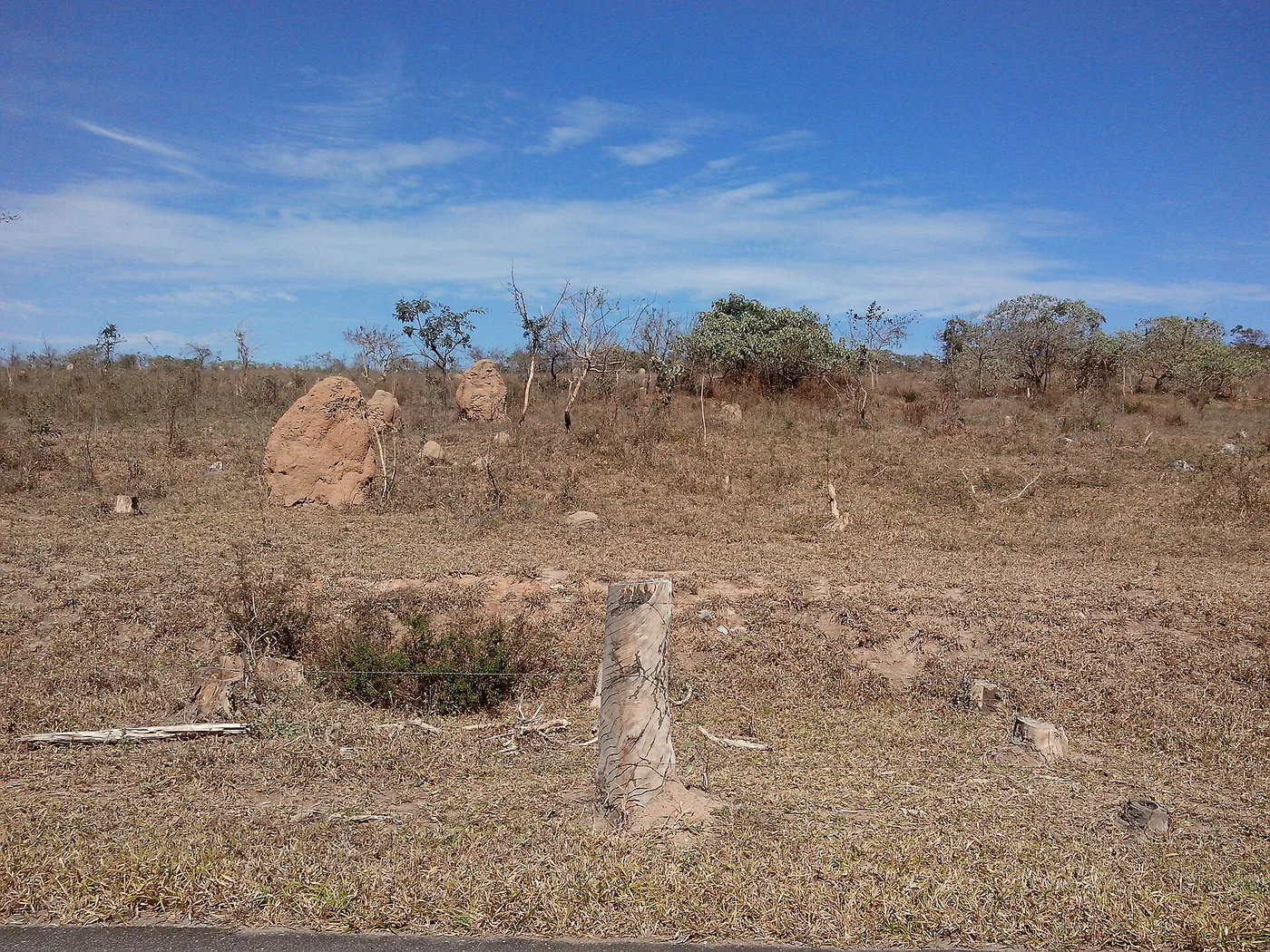
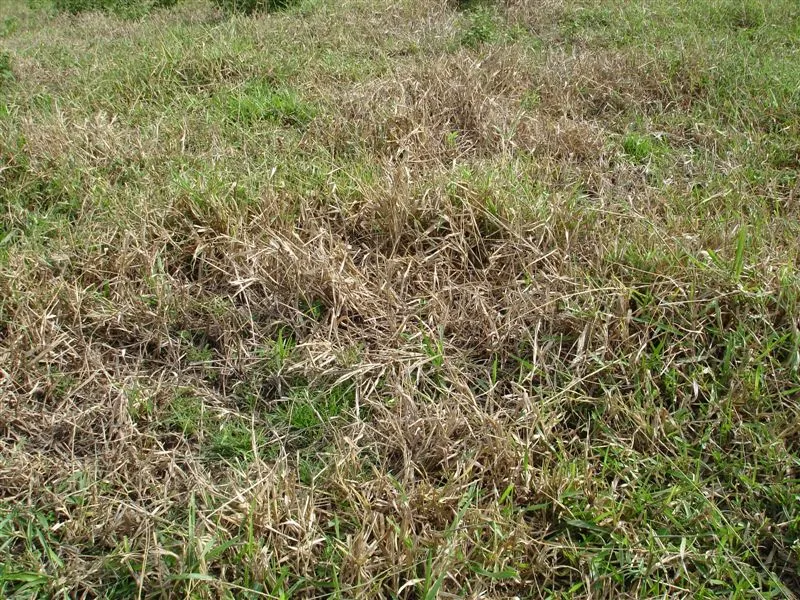
And not all of that pasture is doing well. In 2024, 21.6% of pastures (33.4 million hectares) had low vigor, with little forage and a lot of bare soil throughout the year. MapBiomas treats this condition as severe degradation. In December 2023 the federal government created a national program to convert degraded pasture into productive systems that capture more carbon. Restoring pasture became public policy.
The biggest exporter of grass seed
Establishing or renovating pasture takes grass seed, which in signal grass is the spikelet: the grain wrapped in its glumes, which is what goes into the bag. Until the 1970s Brazil imported that seed. Today it is the world's largest exporter of tropical forage seed, mainly to Latin America, Africa and Asia. Average production from 2013 to 2017 was 286,000 metric tons of raw seed a year (Embrapa, CiCarne Bulletin 35), 75% signal grass (Urochloa) and 24% Megathyrsus maximus, formerly Panicum maximum.
Grass seed is a fruit in clothes
What you buy as grass seed is more than a seed. In grasses, the unit that falls from the plant is usually a clothed caryopsis: a one-seeded fruit still wrapped in glumes, lemma and palea. In signal grass, that unit is the spikelet. From the outside, a full spikelet and an empty one look very much alike. The full one has a caryopsis, the empty one does not.
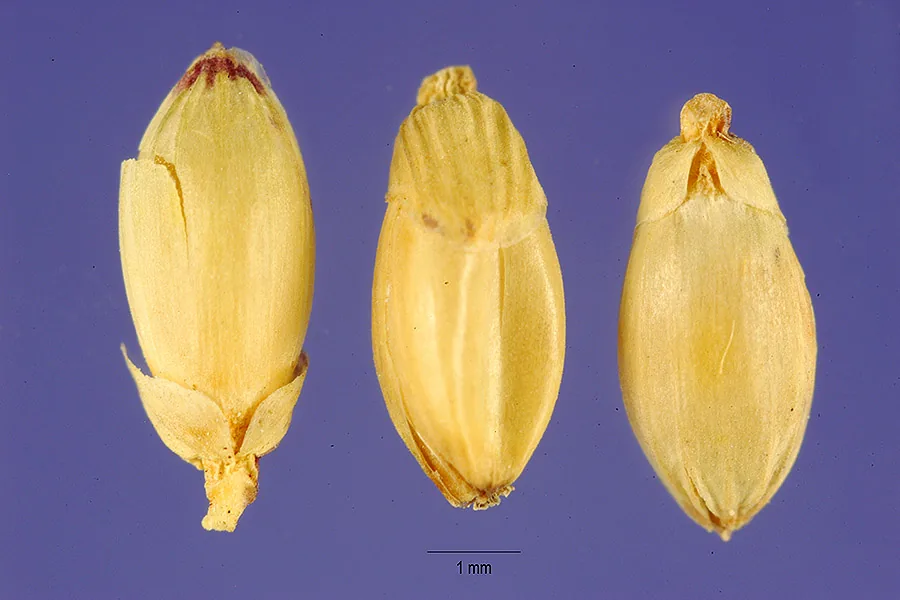
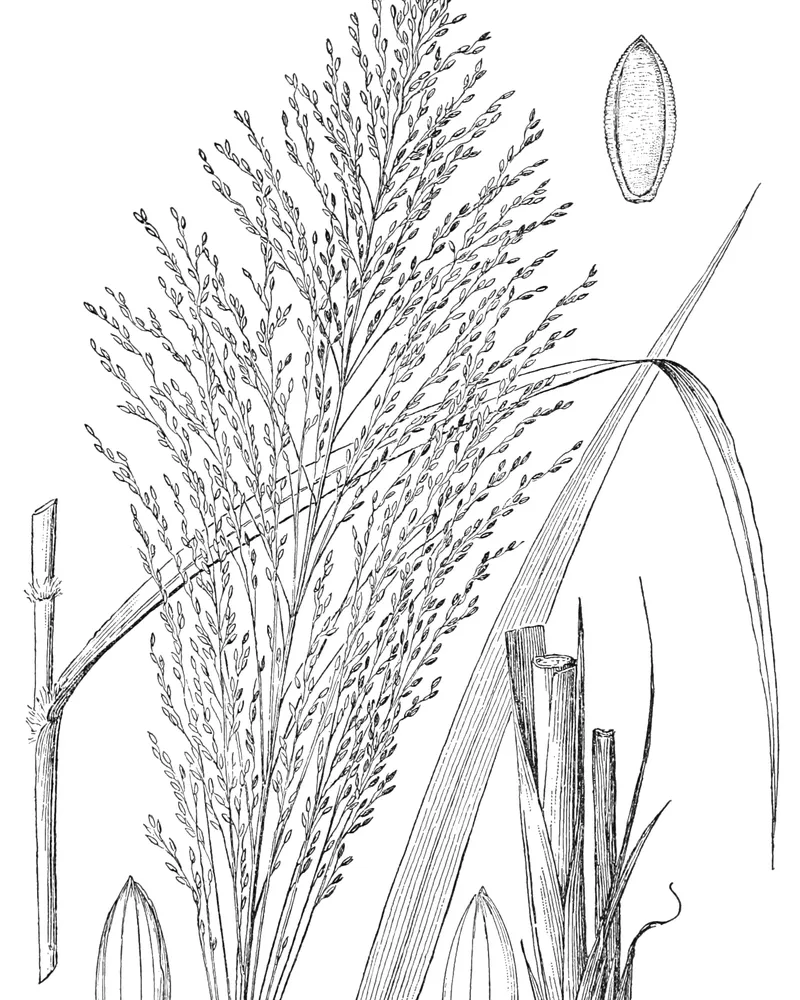
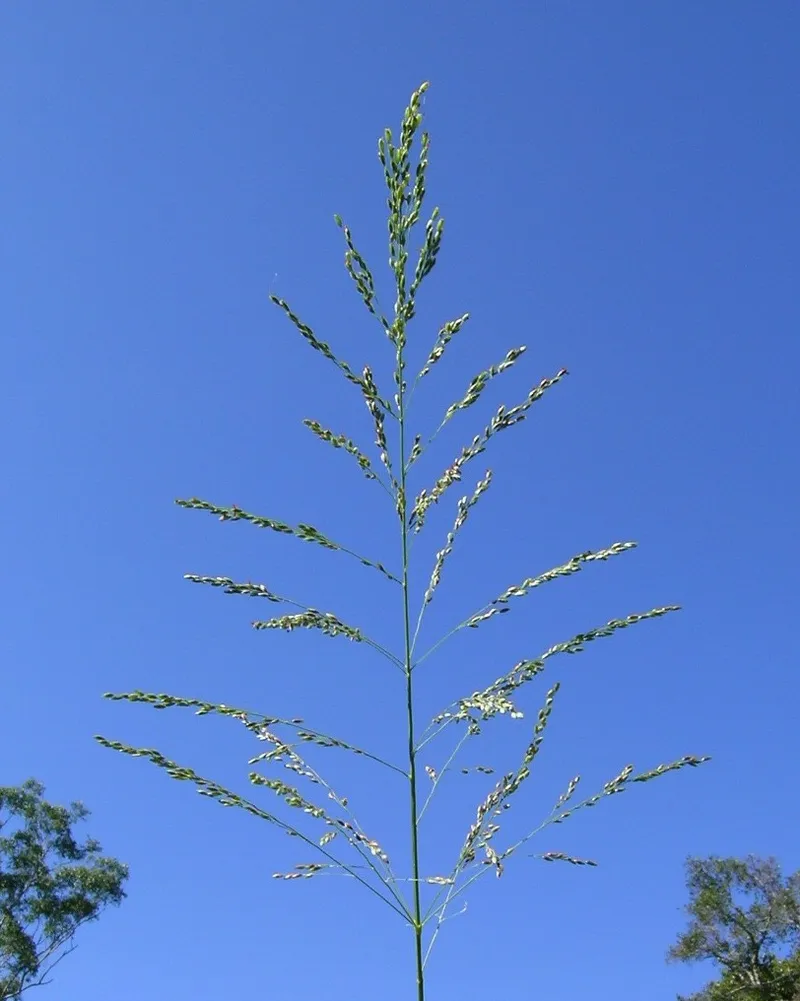
In Megathyrsus, the spikelets sit on an open panicle and do not all ripen at the same time. At harvest, some have already fallen and some are still green, and the seed lot often arrives with many empty or poorly formed spikelets.
Dormant is not dead
Freshly harvested forage seed is usually dormant: it is viable, but it doesn't germinate. In storage, dormancy drops. In Urochloa humidicola, Abrantes, Machado-Neto and Custódio found that keeping the spikelets at 20 °C with a little more moisture made dormancy drop earlier over the year, with no chemicals. In a 2025 study, with spikelets of three grasses stored for up to 44 months, the heavier, well-formed ones kept better in dry air.
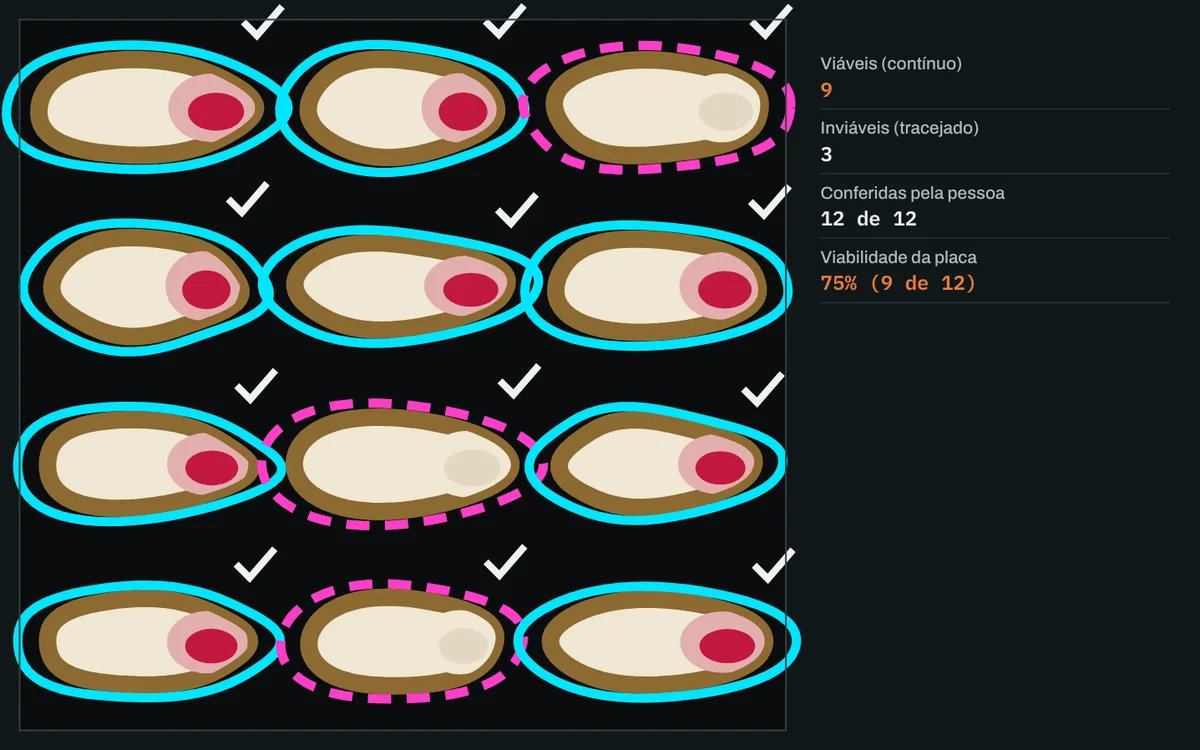
For anyone reading the test, the consequence is direct. A spikelet that didn't germinate may be dormant, and germination alone doesn't tell you whether it was alive. At the end of the germination test, tetrazolium shows which of the ungerminated ones were viable, because it stains living tissue, dormant or not. It shows viability, not dormancy. The method for tropical forage grasses is in the chapter by Custódio and Aguiar in the book Vigor de sementes [Seed vigor], from ABRATES.
Where SeedCounter comes in
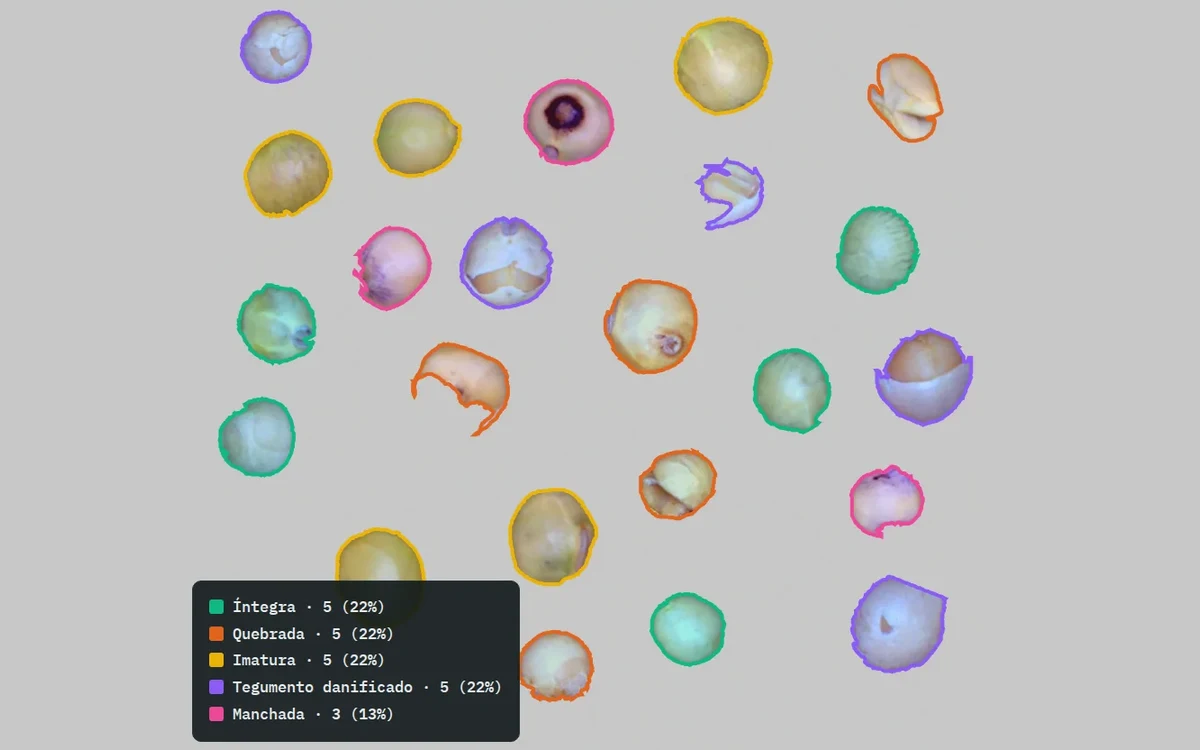
In the SeedCounter forage profile, the protocol classes are at hand: full, empty, dormant, non-viable. You mark each spikelet, the app counts and gives the proportion of each class, and the image is kept with the seed lot. The next time you pull samples from storage, you can open the session and check the spikelet behind each number.
The app doesn't decide whether a spikelet that didn't germinate is dormant or non-viable. Tetrazolium does, or your lab's protocol. See the forage example and open a seed lot of your own in SeedCounter.
For the full bench write-up: Storage and viability, with moisture, temperature, dormancy and tetrazolium.
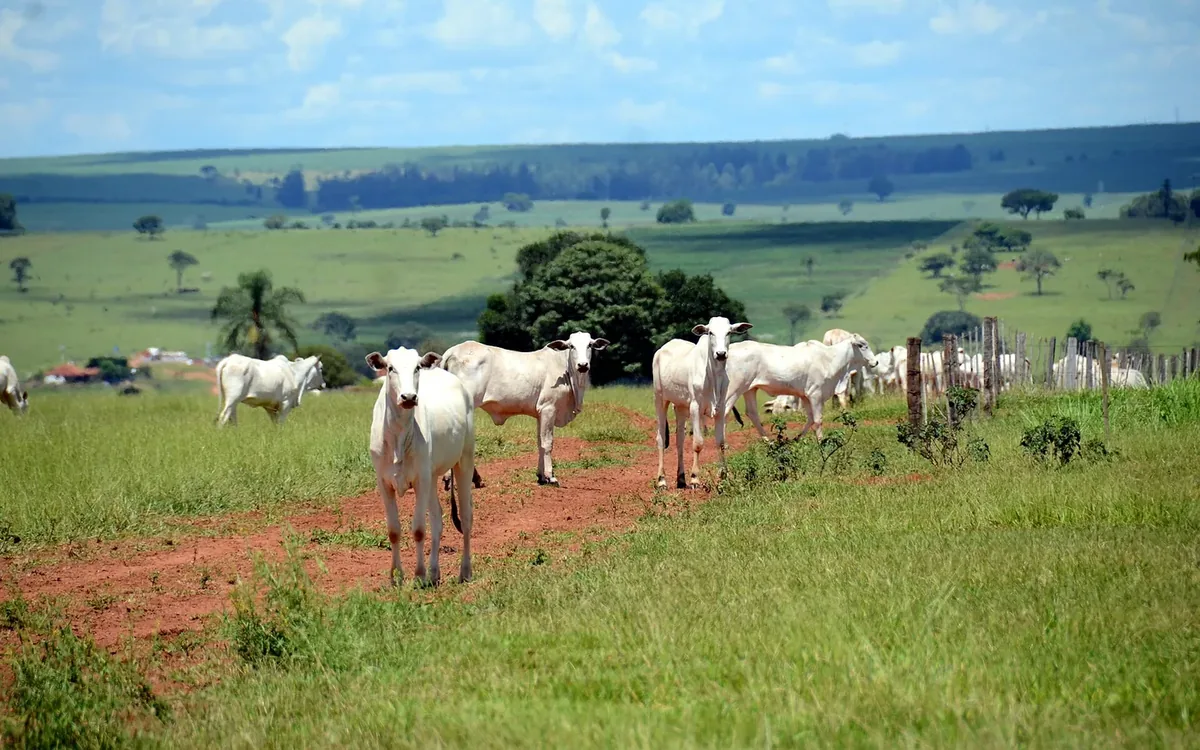
Cover: pasture with cattle in João Ramalho (SP). Photo: Secretaria de Agricultura e Abastecimento, CC BY 2.0.
Sources
- MapBiomas, Collection 11 (12 August 2026). Area of pasture, soybean and sugarcane in 2025. brasil.mapbiomas.org
- IBGE, Áreas Territoriais [Territorial Areas] (2023), for the share of the territory. ibge.gov.br
- MapBiomas, pasture and agriculture survey (10 December 2025). Low-vigor pastures in 2024. brasil.mapbiomas.org
- Decree No. 11,815 of 5 December 2023, creating the National Program for the Conversion of Degraded Pastures. planalto.gov.br
- Landau, Simeão and Matos Neto (2020). Boletim CiCarne 35, Embrapa Gado de Corte. Export and production of forage grass seeds. PDF
- Filgueiras (1986). O conceito de fruto em gramíneas [The concept of fruit in grasses]. Pesquisa Agropecuária Brasileira. PDF
- Abrantes F.L., Machado-Neto N.B., Custódio C.C. (2021). Ciência Rural 51(1), e20200526. doi:10.1590/0103-8478cr20200526
- Abrantes F.L., Machado-Neto N.B., Custódio C.C. (2025). Brazilian Archives of Biology and Technology 68, e25241009. doi:10.1590/1678-4324-2025241009
- Custódio C.C., Aguiar R.P. (2020). Teste de tetrazólio em sementes de gramíneas forrageiras tropicais [Tetrazolium test in seeds of tropical forage grasses]. In Vigor de sementes: conceitos e testes [Seed vigor: concepts and tests], 2nd ed., ch. 15. ABRATES.