Blog · Seeds of Brazil
Orchid seeds in the freezer
Seeds of eight Cattleya species spent 13 to 14 years at −18 °C and still germinated. By the authors' estimates, some could last decades.
November 10, 2026 · 4 min read · by Enrico S. Ambrosio
An orchid seed weighs 0.31 to 24 micrograms. A thousand of them weigh between 0.3 and 24 milligrams, and as many as 4 million seeds have been recorded in a single fruit. It's dust with an embryo inside.
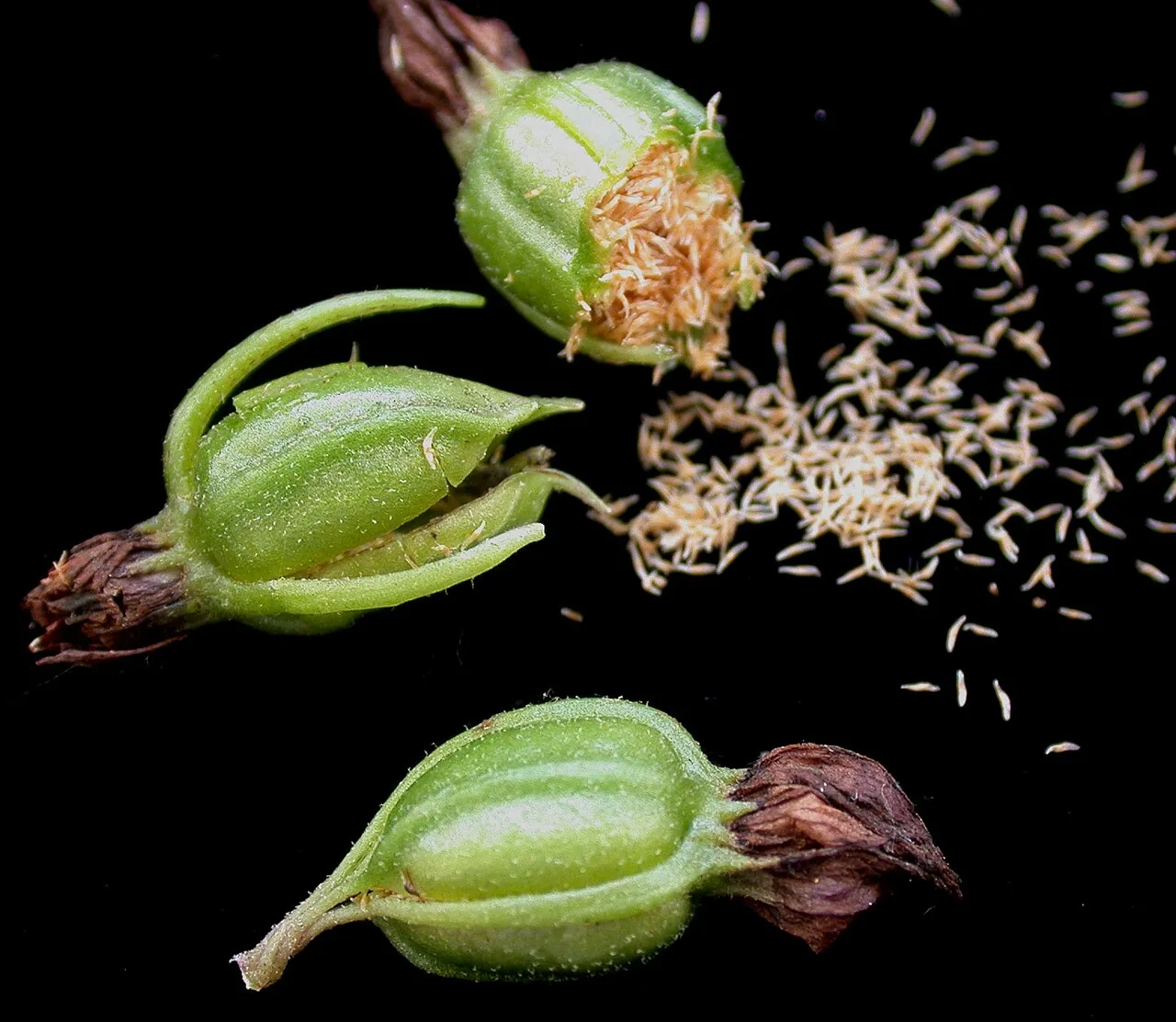
A seed with no endosperm
An orchid seed has no endosperm, the storage tissue that feeds the embryo in other plants. Its few reserves, almost all lipids, sit in the embryo itself. The embryo takes up far less volume than the seed coat around it. In nature, the seedling depends on a mycorrhizal fungus, which supplies the nutrients it needs to germinate and get established. That is why, in the lab, seeds are sown on agar with nutrients.
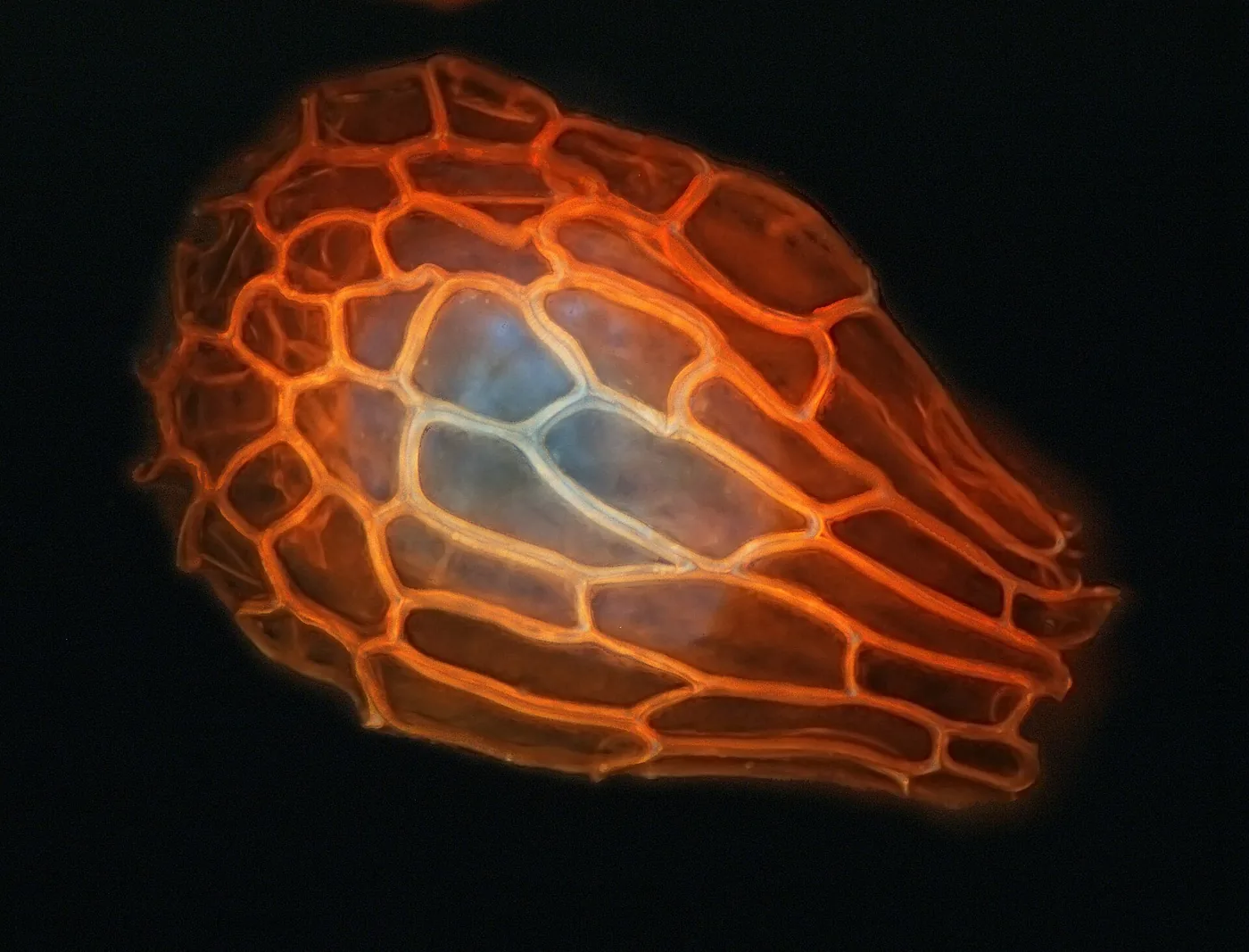
Brazil has plenty of this to keep. According to Flora and Funga of Brazil (Flora e Funga do Brasil), 2,515 orchid species are accepted in the country, and 1,540 occur nowhere else, which puts Brazil second in the world for orchid endemism.
Thirteen years at −18 °C
For a long time, people said orchid seeds don't last long in storage. Prof. Nelson and Prof. Ceci's group put that to the test, and gave it plenty of time. Seeds of eight Cattleya species were dried to about 3% moisture content and stored at −18 °C in the seed bank of the orchid research group (GPEOrq), where they stayed for 13.6 to 14.3 years.
All eight germinated again. With a sucrose pretreatment, final germination went above 90% in seven of them and reached 99.2% in C. hegeriana. The paper came out in 2024 in Annals of Botany, by Francisqueti and colleagues, with a title that says it all: orchid seeds are not always short lived in a conventional seed bank.
Half still viable after decades
From the germination results, the authors estimated how long it would take for only half of the seeds to remain viable at −18 °C. For six species, the estimate came to about 30 years. For C. granulosa, 82 years. For C. harrisoniana, 110 years, with sucrose. Without it, the estimate for C. harrisoniana is close to 60 years.
These are estimates, not observations, because nobody has waited a century. And the gap between 110 and 60 years shows that how you test changes the number.
Why this matters
Seed banking is the simplest, cheapest way to keep orchids. A capsule holds thousands of seeds, and a small jar stores a lot of variability in little space. Between 2007 and 2010, the OSSSU project, led by Kew, built a network of orchid seed banks with institutes from 15 countries and conserved seeds of 386 species. Prof. Nelson was part of that network. If −18 °C is enough for these Cattleya, the conventional bank, the easiest to maintain, can hold seeds for decades.
Where SeedCounter comes in
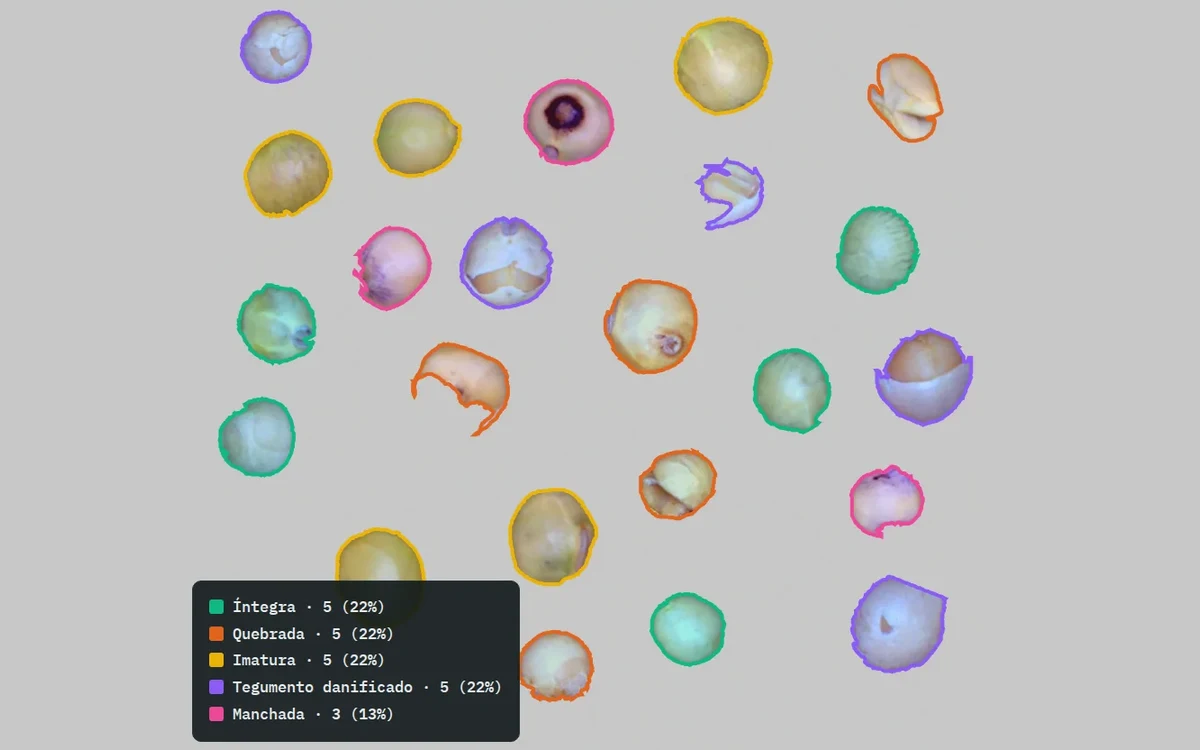
Tracking a stored seed lot means repeating the same tests at each withdrawal. In orchids, that means counting seeds the size of dust and reading the tetrazolium result of each one, after preconditioning in sucrose, without which viability comes out underestimated. SeedCounter counts the seeds in the image, proposes viable or non-viable in the tetrazolium test, and leaves the decision to the person doing the checking. The image stays as a record of the withdrawal, and the number from each date can be compared with the one from the start.
Have a tetrazolium plate you've photographed? Load it into SeedCounter. The group's work on seed banking is under About.
For the full bench write-up: Storage and viability, with moisture, temperature, dormancy and tetrazolium.
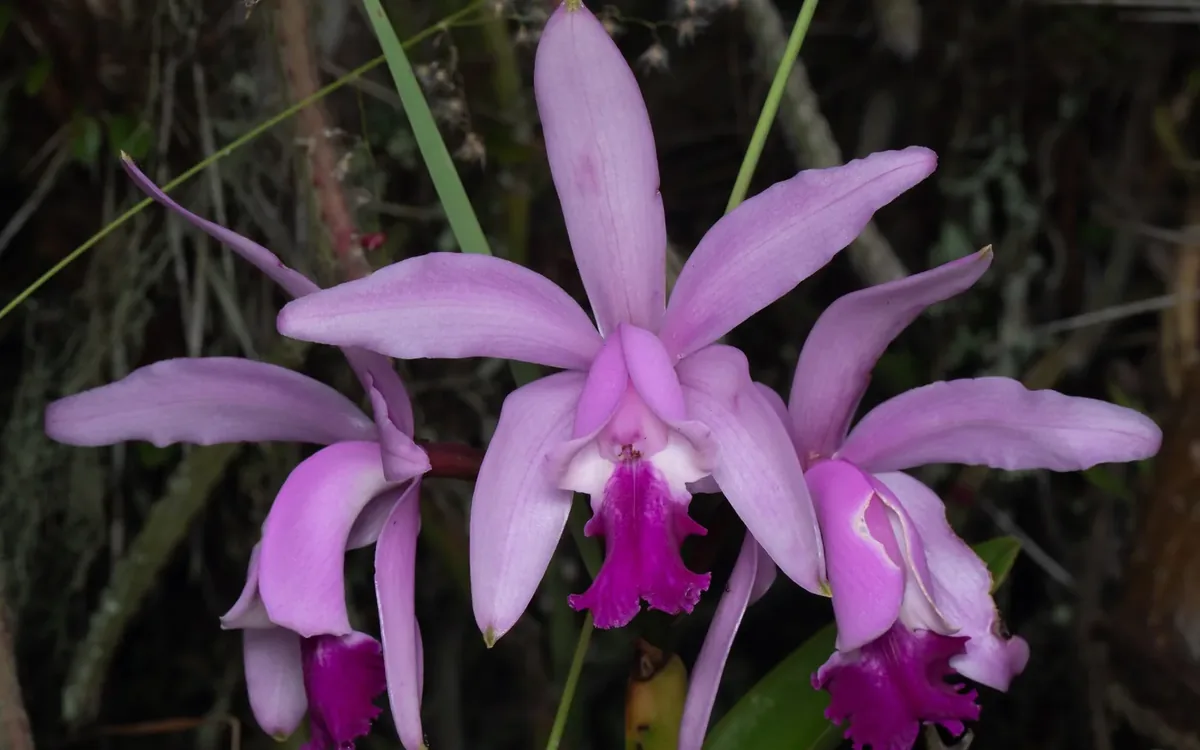
Cover: Cattleya intermedia in bloom in Rio Grande do Sul. Photo: Martin Klippel, CC BY 4.0.
Sources
- Arditti and Ghani (2000). New Phytologist 145, 367-421. Size, weight and number of orchid seeds. full text
- American Orchid Society. Understanding Orchid Seeds. aos.org
- Rasmussen et al. (2015). Annals of Botany 116(3), 391-402. Dependence on the mycorrhizal fungus. academic.oup.com
- Pessoa et al. (2025). Plants 14(22), 3520. Orchid species of Brazil and endemism. mdpi.com
- Francisqueti A.M., Marin R.R., Hengling M.M., Hosomi S.T., Pritchard H.W., Custódio C.C., Machado-Neto N.B. (2024). Orchid seeds are not always short lived in a conventional seed bank! Annals of Botany 133(7), 941-952. Germination and estimates in Table 3. doi:10.1093/aob/mcae021
- Machado Neto N.B., Custódio C.C. (2005). Orchid conservation through seed banking: ins and outs. Selbyana 26(1/2), 229-235. journals.flvc.org/selbyana
- Darwin Initiative. Final report of project 16-012 (OSSSU), 2007 to 2010. PDF
- Hosomi S.T., Santos R.B., Custódio C.C., Seaton P.T., Marks T.R., Machado Neto N.B. (2011). Preconditioning Cattleya seeds to improve the efficacy of the tetrazolium test for viability. Seed Science and Technology 39(1), 178-189. doi:10.15258/sst.2011.39.1.15