

Soybean lot
Four replicates that agree
89.0%
44, 46, 45 and 43 viable in four replicates of 50. The highest and lowest differ by 6 points, well within the tolerance of 18: the test stands, and the lot lies between 84% and 93%.
Open in the calculatorLab guides · Tetrazolium
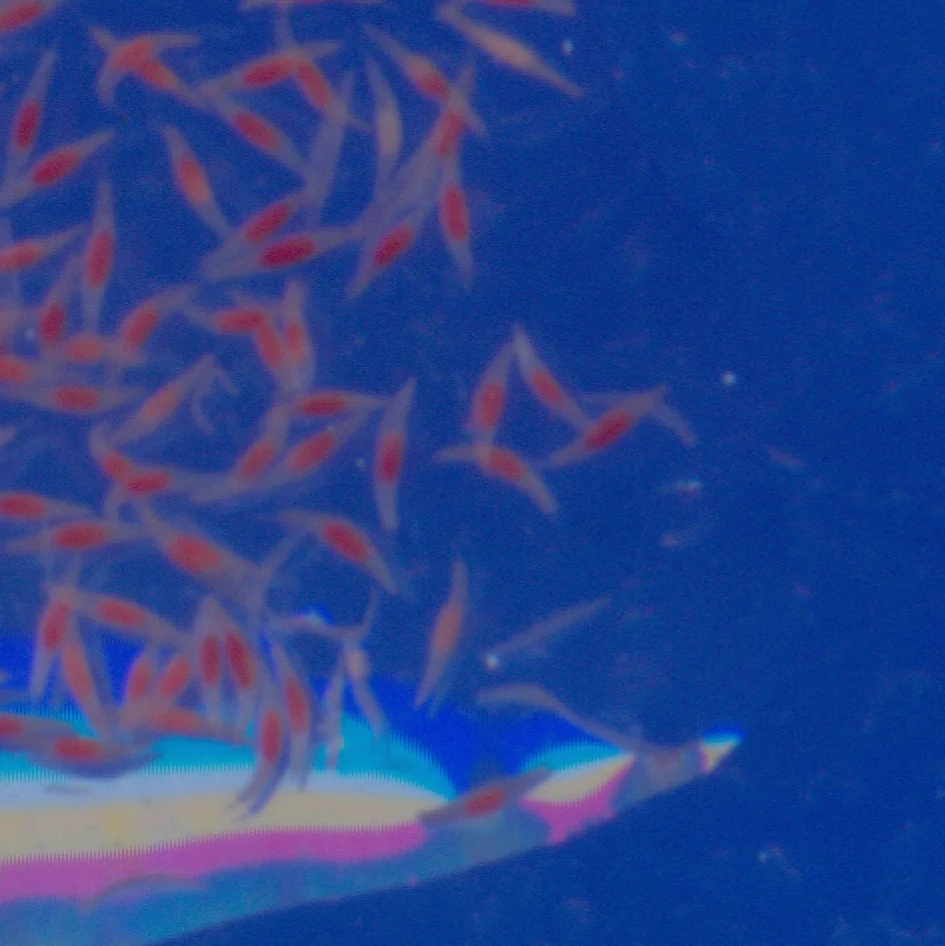
The tetrazolium test tells you within hours whether a seed is alive. The imbibed seed sits in a colourless tetrazolium salt solution. In cells that respire, enzymes turn the salt into a red compound, while dead tissue stays pale. The analyst looks at where the red is and how intense it is, decides seed by seed whether it is viable, and works out the percentage for the lot.
Lab guide · step by step, with references
In short
For soybean, the test takes about a day. That is 16 hours of preconditioning in moist paper at 25 °C, then 2.5 to 3 hours in a 0.075% solution at 35 to 40 °C, in the dark [4]. The germination test of the same soybean only has its final count on day eight.
The result is the percentage of viable seeds. For soybean, the reading also gives vigour and points to the cause of damage: mechanical, moisture or stink bug.
A dormant seed shows up as alive in tetrazolium, because it is alive. So the test is the fast answer to "is the seed alive?", but it does not replace germination when the question is "will it emerge?".
The salt is 2,3,5-triphenyl tetrazolium chloride. It enters the seed colourless and soluble. In living tissue, dehydrogenases, the enzymes of respiration, hand electrons to the salt, which becomes formazan: a red, insoluble compound that stays in the cell where it formed. Dead tissue does not respire, does not reduce the salt and stays white.
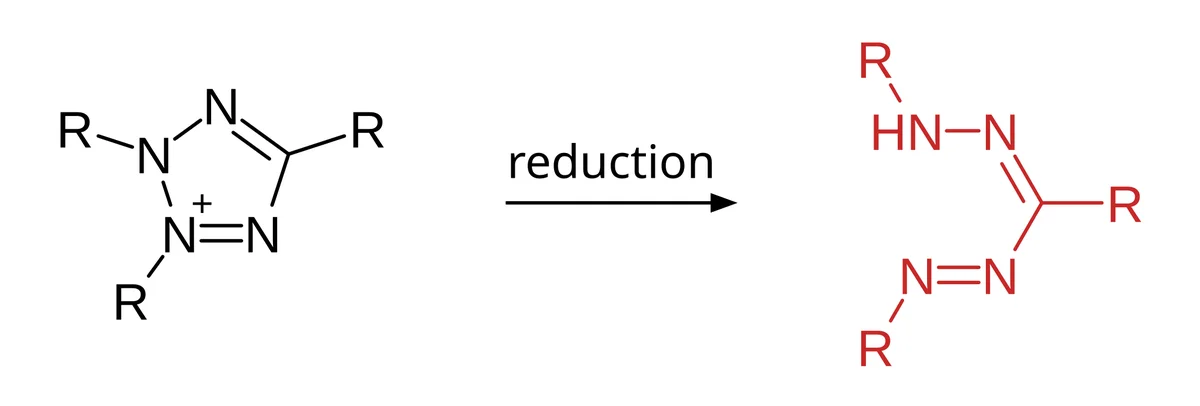
Because formazan does not spread, the colour draws a map of the seed. That is why the test is called topographical: the analyst does not just ask whether there is red, but where. Georg Lakon published the method in 1942, first for cereals and soon after for maize [1], and today it is in the seed testing rules of Brazil and of ISTA [2][7].
The routine is the same for almost every species. What changes from one to the next is the preconditioning, the preparation before staining, the concentration and the time, and that is in the table in the next section.
For the official soybean test, the Brazilian rules ask for 400 seeds, in 4 replicates of 100 or 8 of 50, or 200 as an option. For a company's internal control, 100 seeds in two subsamples of 50 are enough [4]. Draw the seeds at random from the working sample, without picking the good-looking ones.
A dry seed does not stain well. Soybean spends 16 hours at 25 °C rolled in germination paper moistened with 2.5 times the dry paper weight in water; the fast version is 6 hours at 41 °C [4][5]. Slow imbibition in paper keeps the seed from cracking by taking up water too fast.
The solution has to reach the embryo. Imbibed soybean goes in whole and is only cut for reading. In coffee, the parchment comes off and the embryo is excised before staining [3]. Many grasses are cut or pierced first. An orchid seed, almost nothing but embryo and coat, stains whole.
Cover the seeds with the solution and keep them in an oven or water bath, in the dark, because the solution breaks down in light. For soybean, 0.075% for 150 to 180 minutes at 35 to 40 °C, made from a 1% stock solution [4].
Rinse in water and keep the seeds moist until reading, because tissue that dries changes colour. For soybean, cut each seed lengthwise through the embryonic axis with a razor blade and examine both faces of the cotyledons under a 6× magnifier [4].
Look at the colour, position and size of every unstained area. The general soybean rule is that damage to the axis that does not reach the central cylinder keeps the seed viable, and damage that reaches the central cylinder makes it non-viable [4]. The sections on colours and classes below show how.
Viability is the number of viable seeds divided by the total, as a percentage, for each replicate and for the mean. If the gap between the highest and lowest replicate exceeds the tolerance in Table 5.1 of the rules, the test is repeated [3]. The calculator in Calculate does the sum and shows the margin.
Three examples with a published method, for very different seeds. For other species, the methods table of the Brazilian rules (Quadro 5.1) gives the preconditioning, preparation, concentration and time for each one [3].
| Seed | Preconditioning | Preparation | Solution | Source |
|---|---|---|---|---|
| Soybean Glycine max | Moist paper, 16 h at 25 °C, or 6 h at 41 °C | Whole; lengthwise cut through the axis only for reading | 0.075%, 150 to 180 min, 35 to 40 °C, in the dark | Embrapa Soja [4] |
| Coffee Coffea spp. | Between paper, then in water, 24 h plus 36 to 40 h, at 30 °C | Remove the parchment and excise the embryo, which waits in PVP solution | 0.5%, 2 to 4 h, 35 °C | Brazilian rules, Quadro 5.1 [3] |
| Orchid Cattleya | Optional: 10% sucrose for 24 h at room temperature improves staining | Whole | Above 0.25%, more than 6 h at 40 °C, in the dark | GPEOrq and Kew [6] |
For coffee, the rules accept up to half of the cotyledons unstained, as long as the patch does not reach the region that carries nutrients to the axis [3]. For orchids, research by GPEOrq with Kew compared concentrations from 0.1 to 1% and times from 3 to 24 hours against germination on culture medium, and recommended more than 0.25% and more than 6 hours for economy and speed, even without sucrose [6].
Three shades sum up the reading [4]. Light, even carmine red is living, vigorous tissue. Deep carmine, almost purple, is deteriorating tissue: it respires more because it is breaking down, not because it is better. Milky white is dead tissue. How much each patch matters depends on where it falls.
Colour changes with light and with reading time. Read under the same lamp, with the seeds still moist, and if you photograph, put a grey card in the scene so one photo can be compared with another.
For soybean, Embrapa organised the reading into eight classes, 1 to 5 for viable seeds and 6 to 8 for non-viable ones [4]. In the report, vigour is usually the sum of classes 1 to 3 and viability the sum of classes 1 to 5.
| Class | Meaning | Counts towards |
|---|---|---|
| 1 | Viable, highest vigour | vigour viability |
| 2 | Viable, high vigour | vigour viability |
| 3 | Viable, medium vigour | vigour viability |
| 4 | Viable, low vigour | viability |
| 5 | Viable, very low vigour | viability |
| 6 and 7 | Non-viable: extensive damage, or damage reaching the central cylinder of the axis | non-viable |
| 8 | Dead seed | non-viable |
The class comes with a cause. The manual separates three main kinds of damage [4]. Mechanical damage shows as cracks in very dry seed and as bruises in moister seed, deep red when recent and white and flaccid when old. Moisture deterioration leaves symmetrical lesions on both cotyledons, often with wrinkles. Stink bugs leave round lesions with a white centre and an intense red ring around them. Knowing the cause tells you where the lot was lost: at harvest, in the field or in storage.
The sum is simple: viable seeds divided by the total. What reports usually leave out is the margin. A plate with few seeds gives a percentage, but the true value for the lot can be far from it. The calculator uses the Wilson interval, at 95% confidence, which also behaves well near 0 and 100%. It also checks whether the replicates agree, shows how many seeds a narrower margin would take, and lets you copy the result, download it as a spreadsheet or send a link to the calculation.
Tetrazolium calculator
| Rep. | Viable | Total | % |
|---|
Example numbers for 100 seeds. Type how many seeds fell into each class.
The tolerance is estimated with the same criterion as the official tables (a 2.5% chance that variation exceeds it by chance). For an official report, Table 5.1 of the rules applies [3]. Nothing you type leaves your browser.
With the 65 seeds on the orchid plate, viability comes out at 55.4%, and the range runs from 43% to 67%. With 400 seeds in the same proportion, the range would shrink to about 5 points either side. That is why the rules ask for hundreds of seeds in replicates rather than a single plate. The full derivation, with the reasoning behind each interval, is in Proportions and intervals.
Situations that come up every week in the lab. Each case opens in the calculator above, with the numbers ready for you to change.
Soybean lot
89.0%
44, 46, 45 and 43 viable in four replicates of 50. The highest and lowest differ by 6 points, well within the tolerance of 18: the test stands, and the lot lies between 84% and 93%.
Open in the calculatorRepeat the test
86.0%
47, 36, 45 and 44 viable out of 50. The second replicate pushes the gap to 22 points, above the tolerance of 20. Before blaming the lot, check the sampling and preparation of that replicate.
Open in the calculatorTetrazolium × germination
92.0%
Tetrazolium gives 92% (87% to 95%), and germination of the same lot gave 70%. A 22-point gap points to dormancy, fungi or seed treatment, not to dead seed.
Open in the calculatorThe two tests answer similar questions, but not the same one. Many labs run both, and the gap between them is information too.
| Tetrazolium | Germination | |
|---|---|---|
| Question | Is the seed alive? | Does the seed produce a normal seedling? |
| Time for soybean | About a day | Final count on day eight |
| Dormant seed | Counts as viable | Does not germinate in time and can look dead |
| Fungi and seed treatment | Do not show in the colour | Show up as abnormal and dead seedlings |
| Who reads it | A trained analyst, seed by seed | An analyst, seedling by seedling, with the criteria in the rules |
| What else it gives | Vigour and cause of damage, for soybean | The figure that goes on the bag and into the marketing standard |
When tetrazolium gives much more than germination, the usual suspects are dormancy, fungi or a seed treatment that harmed the seedling. When germination gives more, suspect the tetrazolium reading or the sampling.
The tetrazolium reading is done by eye, and that is where a photo helps. The image keeps the plate as it was, lets someone else check the same reading and turns the count into a number per seed. At GPEOrq, stained orchid seeds go onto a flatbed scanner over blue paper, which contrasts with both the red and the translucent coat.
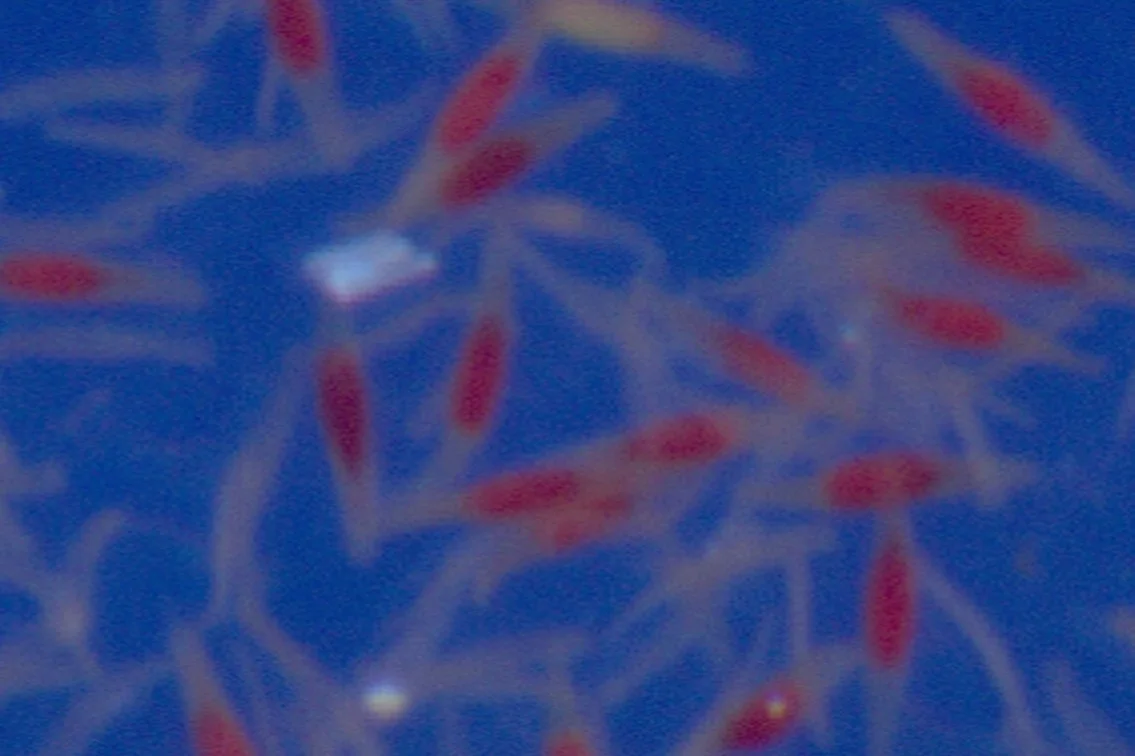
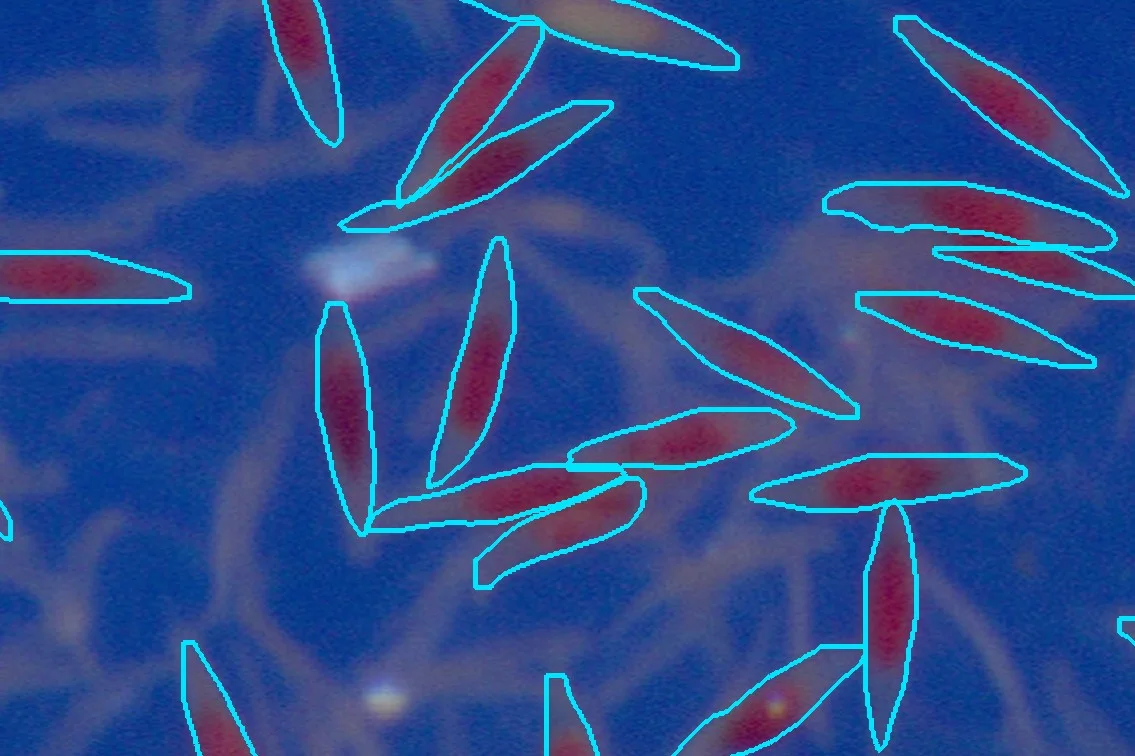
In SeedCounter, the machine proposes each seed's outline and a class, and a person checks before the number counts. Viable gets a filled cyan disc and non-viable a hollow magenta ring, so the class stays readable in black-and-white print and for people who struggle to tell red from green. You can create your protocol's own classes, such as the eight soybean classes, and mark each seed in them. The report comes out with the percentage and the number of every seed.
So the photo helps rather than hinders
A plain background that contrasts with the seed and with the red; for pale seeds, blue works well. Even light without glare, ideally a flatbed scanner or a stereo microscope with a camera. A grey card and a ruler in the scene, to compare colour between photos and measure in millimetres. Seeds not touching each other. The manual shows each step in the app.
What the photo does not solve
A top-down photo shows the surface. For soybean, the reading that decides the class is inside, on the cut faces, and the official report is still the analyst's at the magnifier. The photo is for recording, counting and checking, and every class the app proposes only counts after it has been checked.
It depends on the species. For soybean, about a day: 16 hours of preconditioning at 25 °C, or 6 hours at 41 °C in the fast version, plus 2.5 to 3 hours in a 0.075% solution at 35 to 40 °C. The soybean germination test has its final count on day eight.
No. It tells you whether the seed is alive, and germination tells you whether it produces a normal seedling. A dormant seed is alive but does not germinate in time, and fungi or seed treatments harm the seedling without changing the colour. The figure on the bag and in the marketing standard comes from the germination test.
Yes. A dormant seed respires and stains. That is one reason to use tetrazolium on species with dormancy, such as many forage grasses and native species: it separates the dormant seed from the dead one.
The one in the species' method. For soybean, 0.075%; for coffee, 0.5%; for orchids, above 0.25%. Quadro 5.1 of the Brazilian seed testing rules and Chapter 6 of the ISTA rules give the concentration, time and temperature for each species. Too strong a solution darkens the colour and makes reading harder.
Because the salt breaks down in light. Exposed solution loses strength and the seed stains weakly, which can make a living seed look dead. Staining and storing the solution are done in the dark.
Viability is the percentage of seeds that are alive. Vigour is the share of them in good condition. For soybean, viability adds up classes 1 to 5 and vigour usually adds up classes 1 to 3: a class 5 seed is alive, but has little chance of producing a strong plant in the field.
It can be recorded, counted and checked. SeedCounter, free in the browser for research and teaching, proposes the outline and class of each seed in a photo or scan, and a person checks before the number counts. For seeds that stain whole, such as orchids, the photo shows what decides the class. For soybean, the deciding reading is on the cut faces, and the photo is a record.
To keep going: why a red embryo respires, colour and class with 1,614 real orchid seeds, how to compare two people's readings and the tetrazolium entry in the glossary.
SeedCounter proposes the outline and class of each seed, you check, and viability comes out with the number of every seed. Free for research and teaching.
Openly licensed photos from Wikimedia Commons, iNaturalist and USDA PLANTS, resized and converted to WebP. Photos marked as real with no credit come from GPEOrq and GPSEM.
Usage analytics
With it, Google Analytics and Microsoft Clarity show which pages help and where people get lost. No ads, and nothing loads before you choose.


