Blog · Bench
How many seeds fit on a coin?
In a simulation, 25 seeds with an average size of 5.2 × 2.3 mm fit at random on a 27 mm coin. Arranged, more would fit. Here is why.
October 20, 2026 · 4 min read · by Enrico S. Ambrosio
A 1-real coin is 27 mm across. The question sounds like a joke. How many 5.2 × 2.3 mm seeds fit on top of it? The answer depends on how they get there.
The animation above is a simulation with model seeds. They drop one at a time, at a random spot. If the new seed touches one that is already there or hangs over the edge, it is discarded and another one tries. This round, the coin jammed at 25 seeds. Another draw might stop a little higher or lower.
Dropped at random, gaps remain
The 25 seeds cover 42% of the coin's area. More than half stays empty, and still no more seeds fit. We tested another 200,000 random positions, with seeds of every size in the lot, and none found room. The gaps left over are smaller than a whole seed.
Each seed that lands at random leaves a space around it that no other seed can use. In physics, this process has a name: random sequential adsorption. It always jams before the surface is full, because the gaps get too small.
The problem even has a history. In 1958, the Hungarian mathematician Alfréd Rényi asked how many cars fit on a street when each one parks at a random spot. The cars end up filling 74.8% of the street, and the rest is left in gaps too short for a car. On a plane, random disks jam at 54.7% of the area, and ellipses twice as long as they are wide, at 58%. The coin stays below that, at 42%, because the edge also takes space: near it, almost no seed fits whole.
Arranged, more would fit
Area sets the ceiling. The coin is 573 mm². A model seed, treated as a 5.2 × 2.3 mm ellipse, is 9.4 mm². Divide one by the other and you get 61 seeds.
No arrangement reaches 61 seeds, because oval seeds always leave gaps between them. But in rows, side by side like bricks, far more fit than the 25 seeds in the random draw. How many? We did the math. With the average seed, 5.2 × 2.3 mm, and the same 0.05 mm gap as the simulation, the best row arrangement we found puts 43 seeds on the coin, covering 71% of the area. We tested thousands of lattices, rotated and shifted. There may be an arrangement with one or two more, because for ellipses inside a circle there is no formula for the maximum.
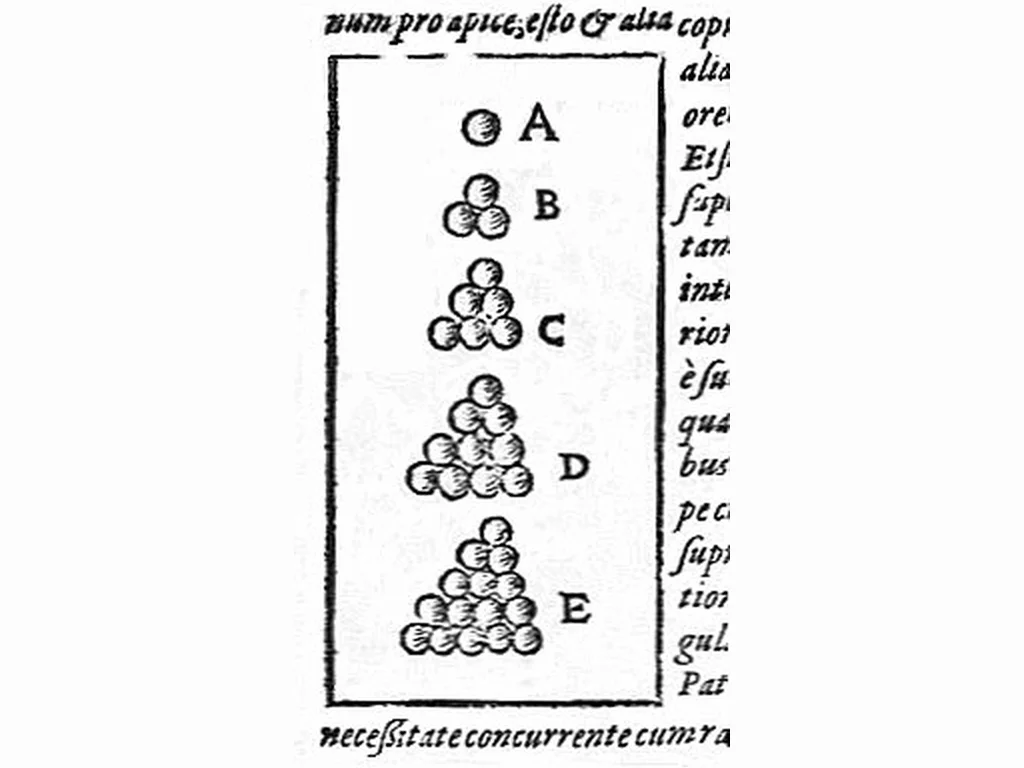
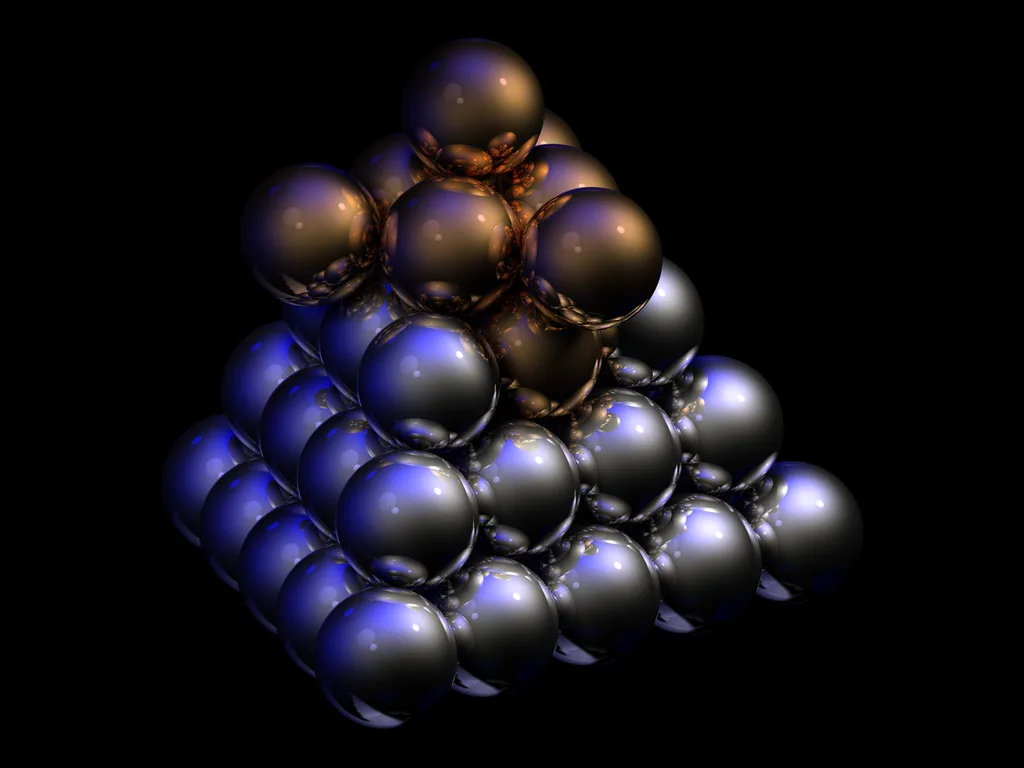
The question is old. In 1611, in a little book on snowflakes, Johannes Kepler wrote that no stack of equal spheres could be denser than the cannonball pile, with 74% of the space filled. The question had reached him through Thomas Harriot, who had been asked to count the cannonballs stacked on ships. The proof only came in 1998, from Thomas Hales and a lot of computer calculation, and by 2014 it had been checked step by step by verification software. Knowing how much fits is hard even for mathematics.
The vacuum counters used in germination testing do this arranging, like the 1928 one shown in our first post. Each seed goes into a hole in the grid, a fixed distance from its neighbor.
What the coin teaches about the plate
When seeds are spread by hand, each one's position is a random draw. The coin shows what happens when a plate fills up this way. Well before the seeds cover half the area, some are already almost touching their neighbors.
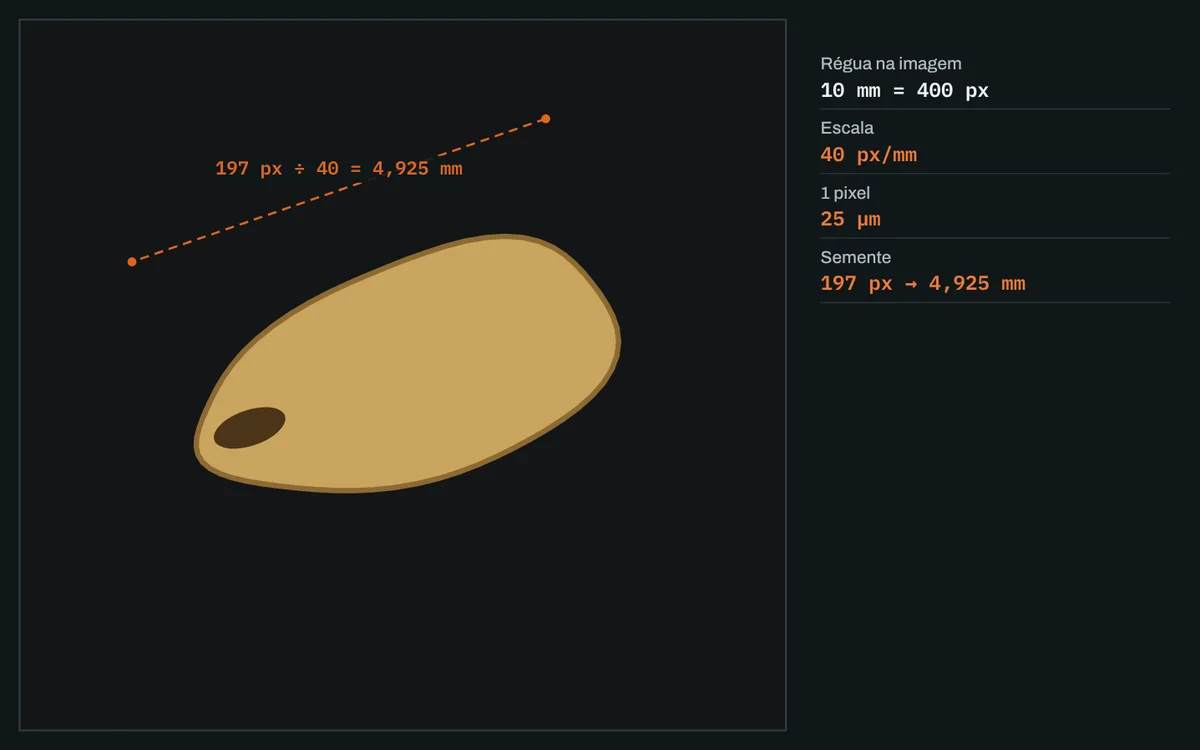
In a photo at 40 px/mm, a 0.1 mm gap between two seeds is 4 pixels. A bit of shadow or blur wipes out those 4 pixels, and the algorithm sees one seed where there are two.
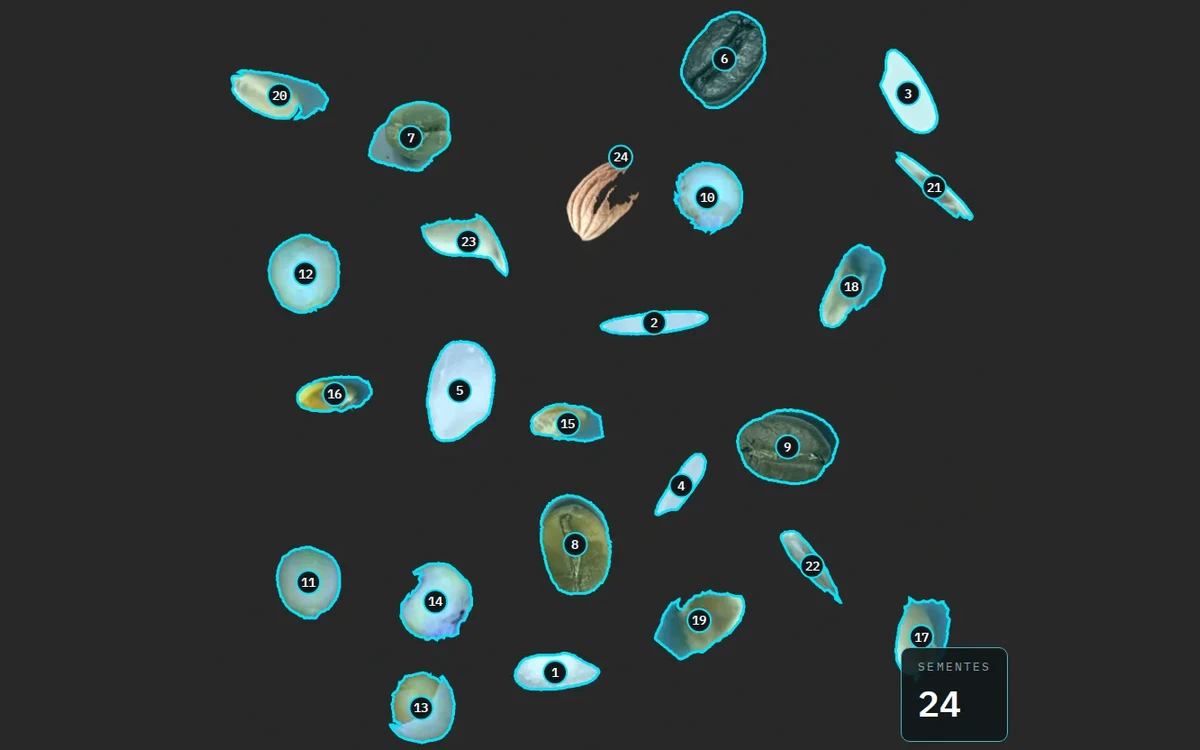
That is why, on a well-set-up bench, seeds are left with a visible gap between them. SeedCounter proposes splitting the touching seeds and you decide, but each split is one more round of checking.
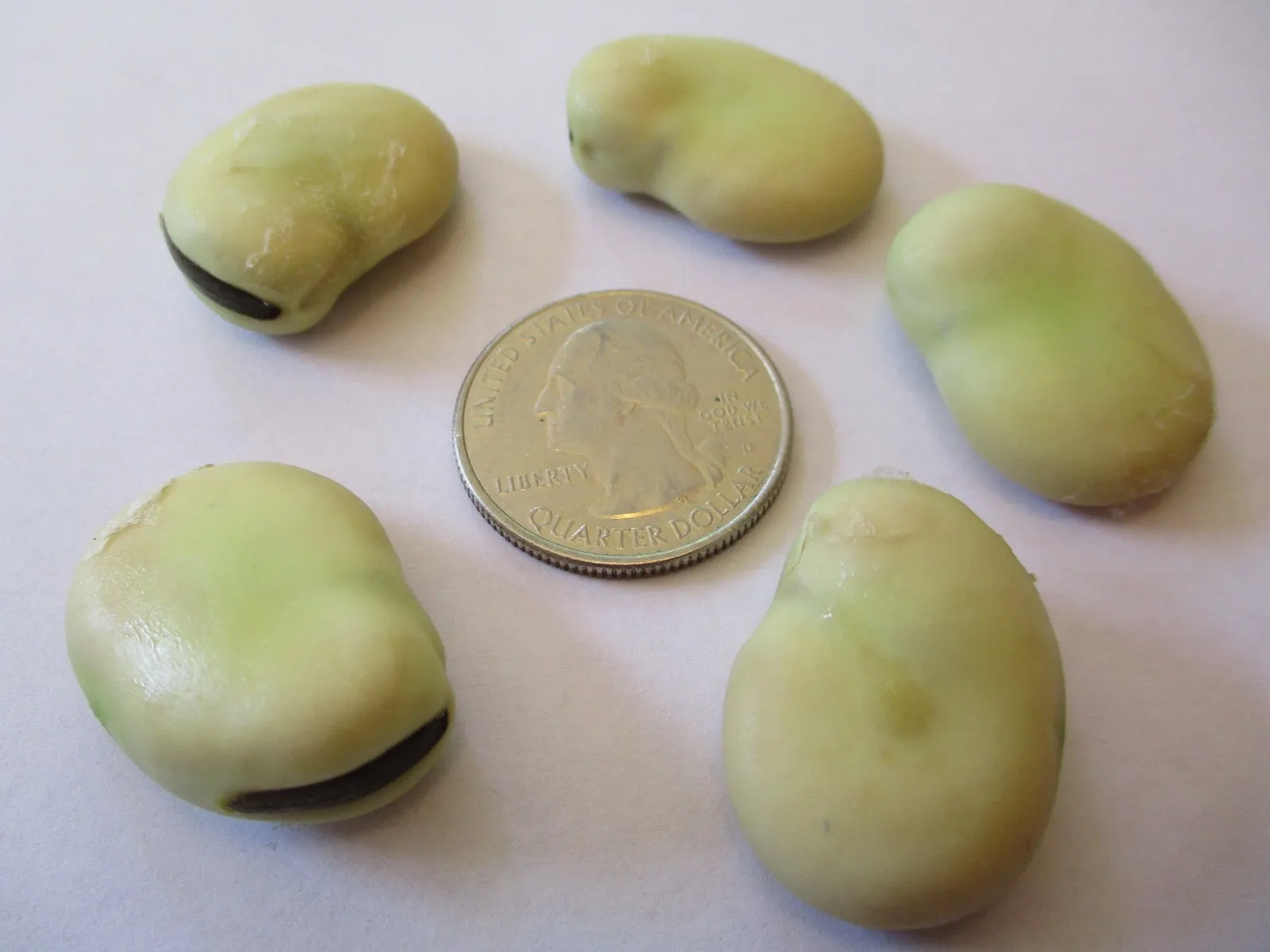
Then count your plate in SeedCounter and see how many ended up touching.
Sources
- Random sequential adsorption, with Rényi's parking problem (1958) and the coverages for disks and ellipses. Wikipedia
- Kepler conjecture, with Harriot, Hales's proof (1998) and the formal verification (2014). Wikipedia
- The post's calculations (the random fill on the coin, the 200,000 attempts and the lattice search) are in
_src/real/moeda/, in the site repository.
For the full math: Proportions and intervals, on the margin of error of any count.